







Fashion encompasses clothing, footwear, accessories, and jewellery shaped by evolving cultural aesthetics. Art, by contrast, spans a broader spectrum of creative expression, storytelling, and cultural participation. Thus, it is no surprise that fashion is often described as wearable art, serving as a powerful medium of expression. But when designers engage with the work of established artists and reinterpret it into their own collections, the result is an entirely different level of artistry.
Art references in fashion have appeared across decades, from the late 1900s to today. Recent examples include Fendi’s collaboration with artist Aya Takano, and Louis Vuitton drawing inspiration from Leonardo da Vinci. However, it is within the late 20th century – particularly the late 1990s and early 2000s – that some of the most unforgettable archival collections proved just how seamlessly designers could turn art into fashion.
Christian Dior Spring/Summer 1949 Couture – Claude Monet
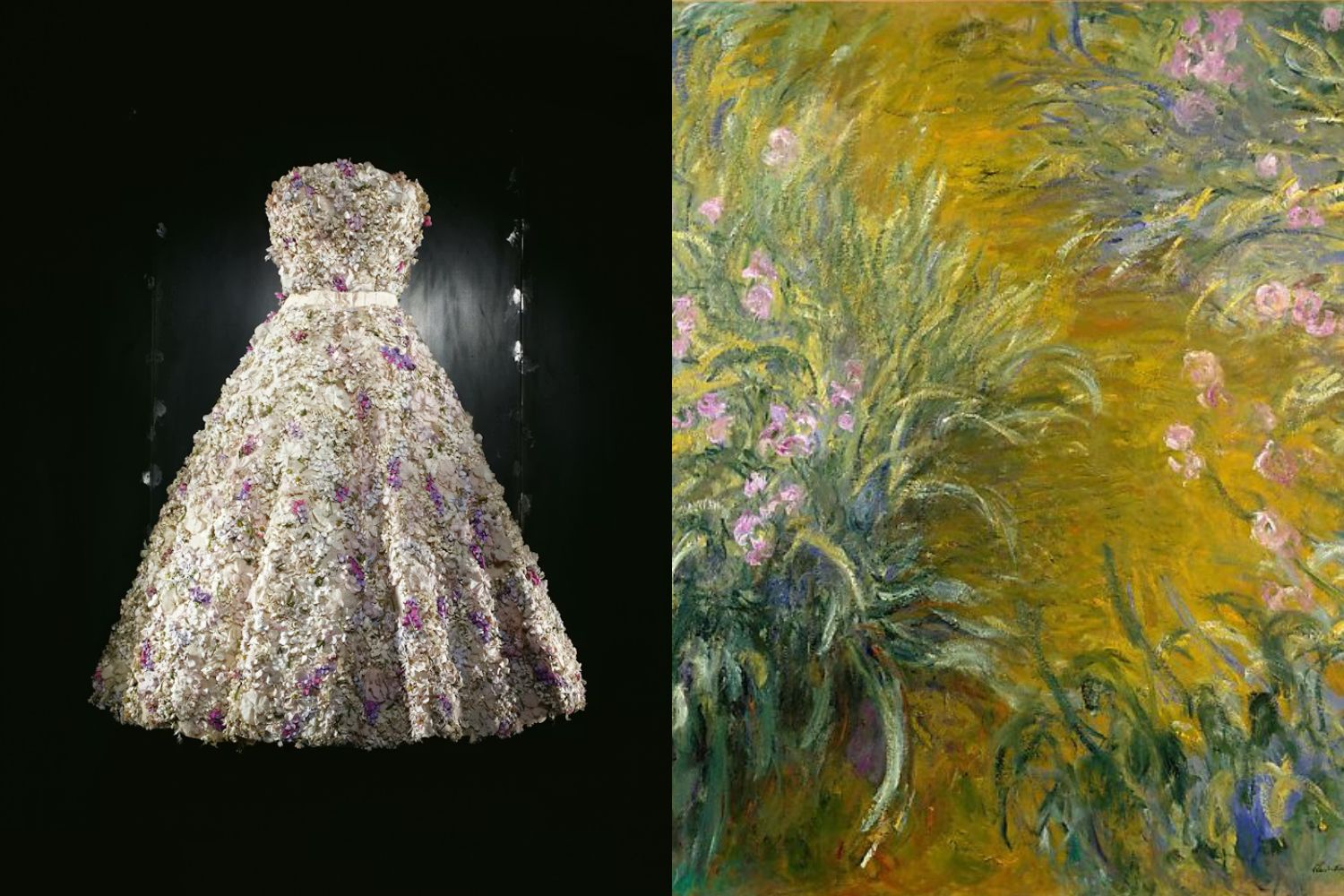
Claude Monet’s impressionist paintings have long served as a touchpoint for fashion, influencing designers like Christian Dior, Akris, Georges Hobeika, and Dolce & Gabbana. In 1949, Monsieur Dior looked to The Path Through The Irises, one of Monet’s paintings of his favourite flower. The motif was translated into thousands of delicate pastel floral appliqués. Later, other creative directors of the maison followed his footsteps in referencing Monet’s works, from John Galliano in 2007 to Raf Simons in 2012.
Yves Saint Laurent Fall/Winter 1965 Couture – Piet Mondrian
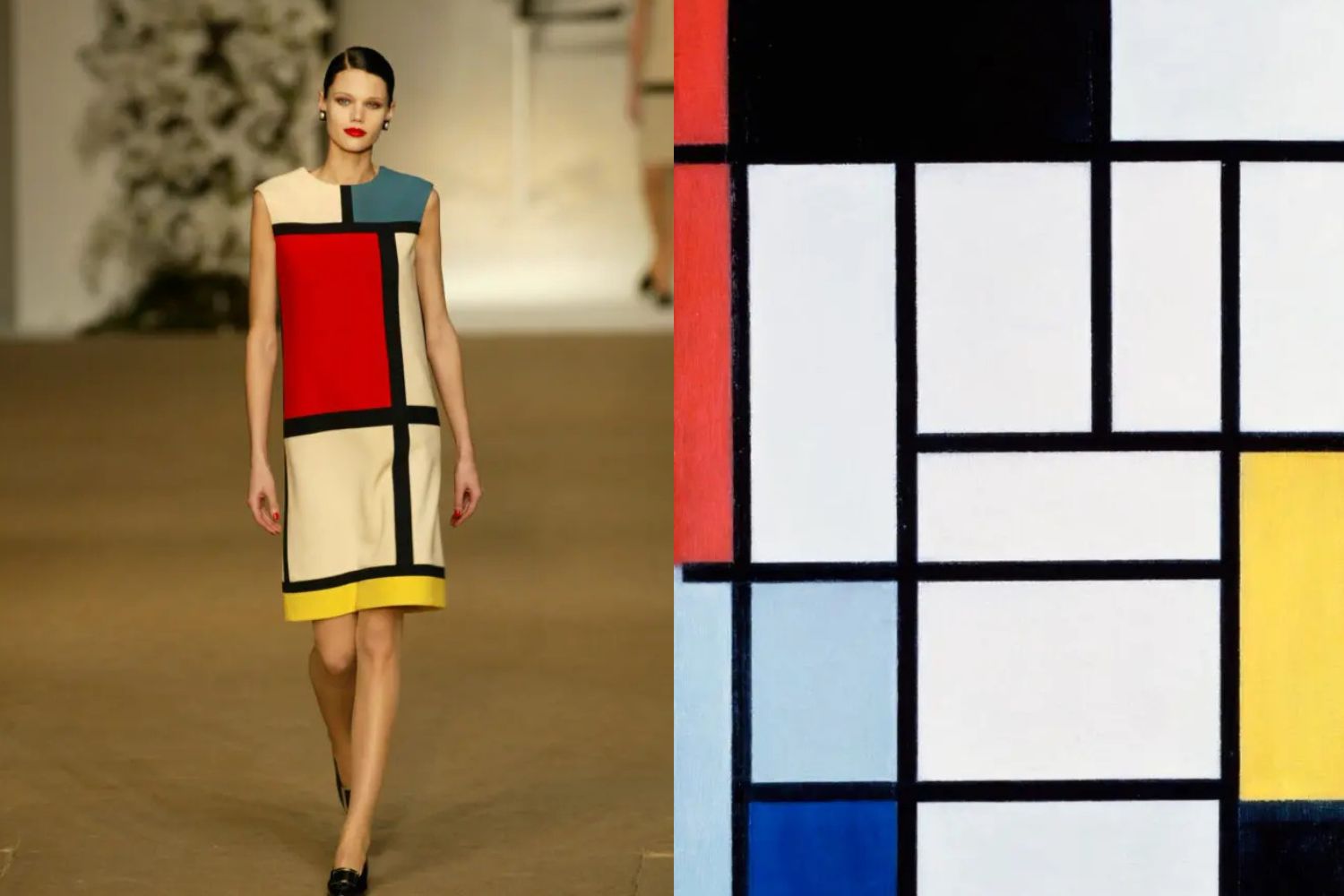
Piet Mondrian was a Dutch painter who explored cubism and was known for using primary colours framed by bold black outlines. However, to Mondrian, his art wasn’t merely random lines, but represented a duality between horizontal and vertical, material and spiritual, as well as feminine and masculine. Yves Saint Laurent channelled the artwork’s simplicity into clothing through simple cuts, geometric lines, and transforming two-dimensional paintings into three-dimensional dresses. As Saint Laurent himself noted: “I believe the work of a couturier is very much like that of an artist. In fact, I have constantly found inspiration in the work of contemporary painters: Picasso, Matisse, Mondrian.”
Yves Saint Laurent Spring/Summer 1988 Couture – Vincent van Gogh
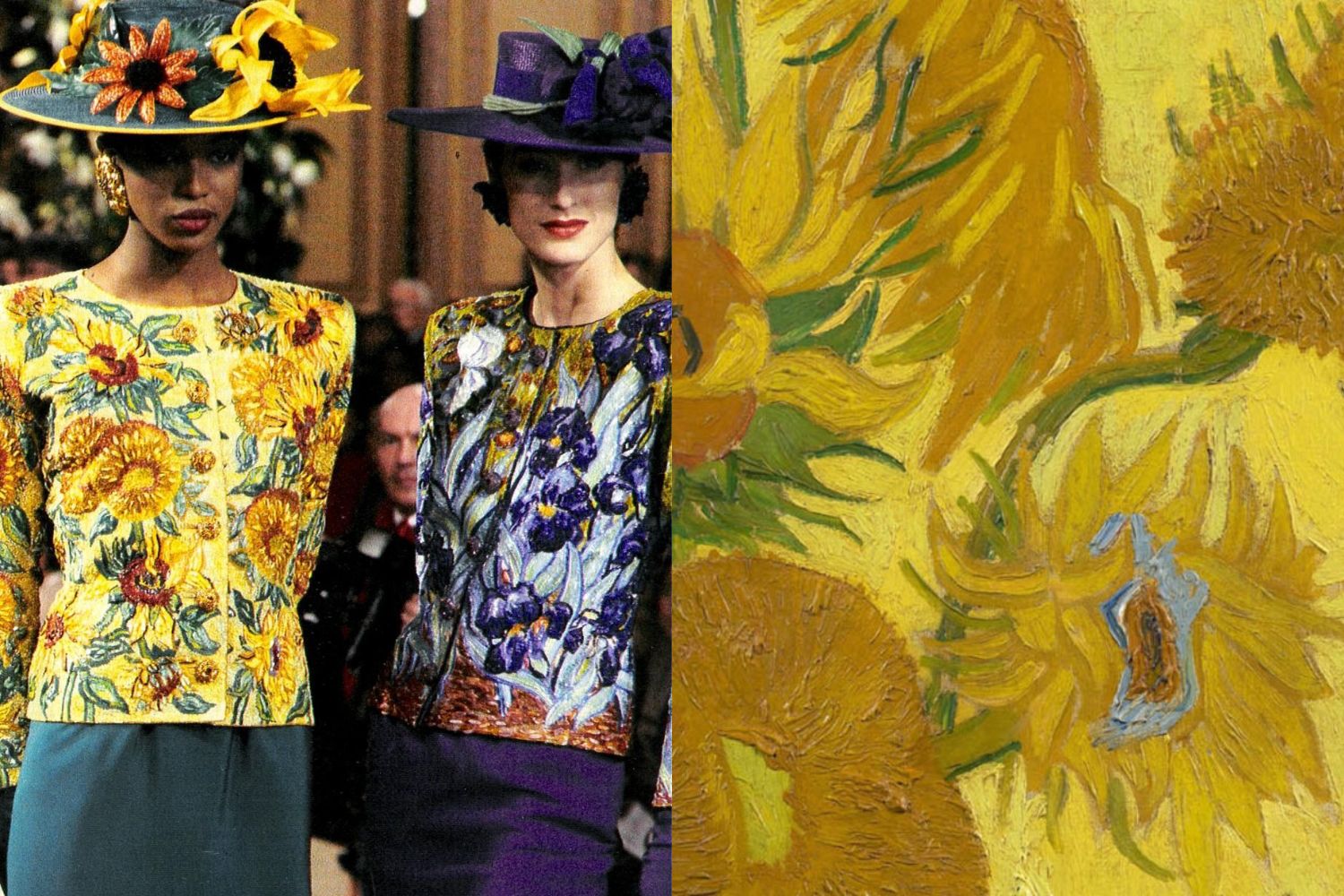
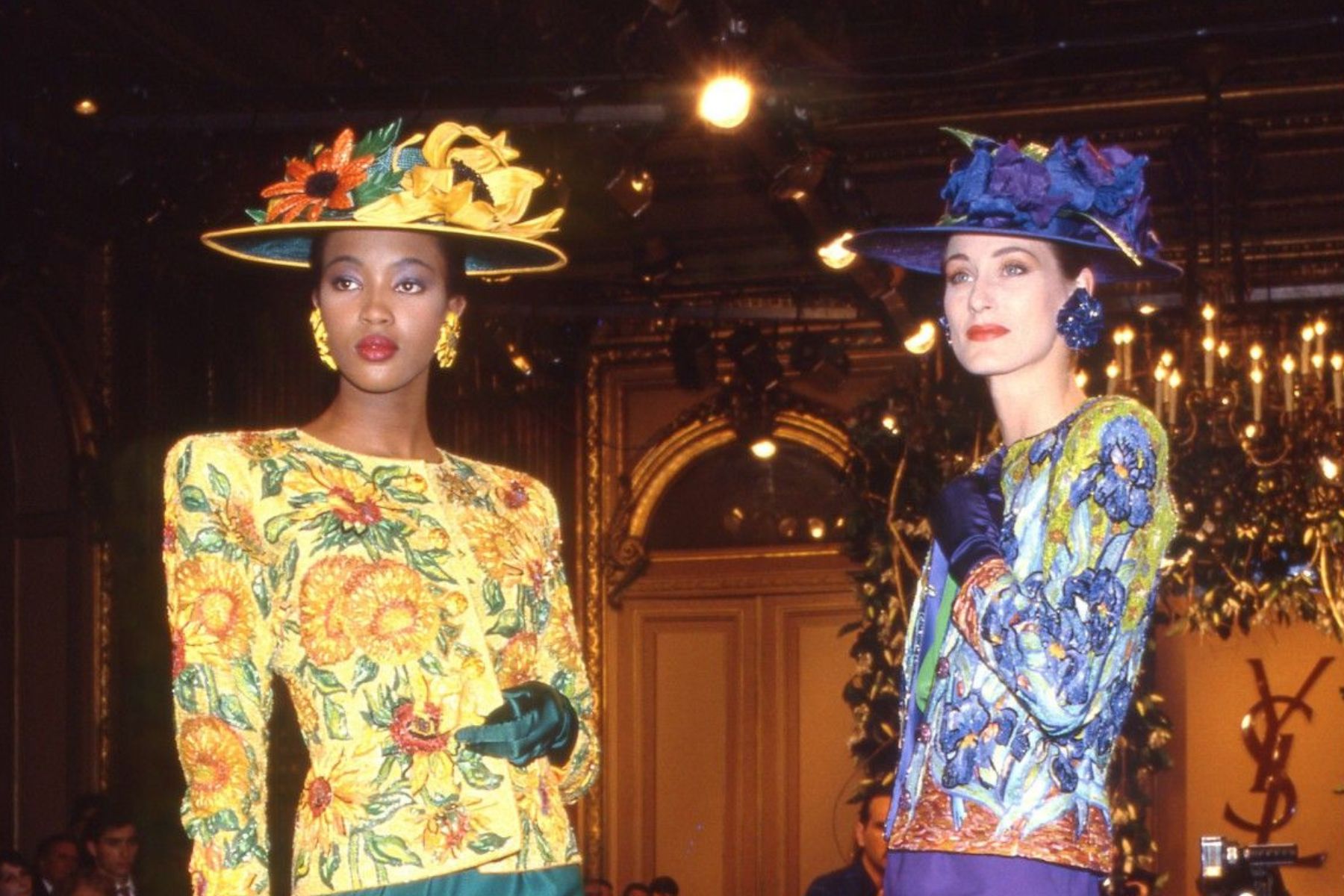
Continuing his interest in art, Saint Laurent paid tribute to Vincent van Gogh in 1988 through richly embellished jackets inspired by the artist’s Irises and Sunflowers paintings. Artisans meticulously hand-embroidered thousands of sequins and beads to evoke painterly brushstrokes, creating a dimensional, textured surface. Modelled by supermodel Naomi Campbell and Bess Stonehouse, each jacket required over 600 hours of work, making them some of the world’s most expensive couture pieces.
Versace Spring/Summer 1991 – Andy Warhol
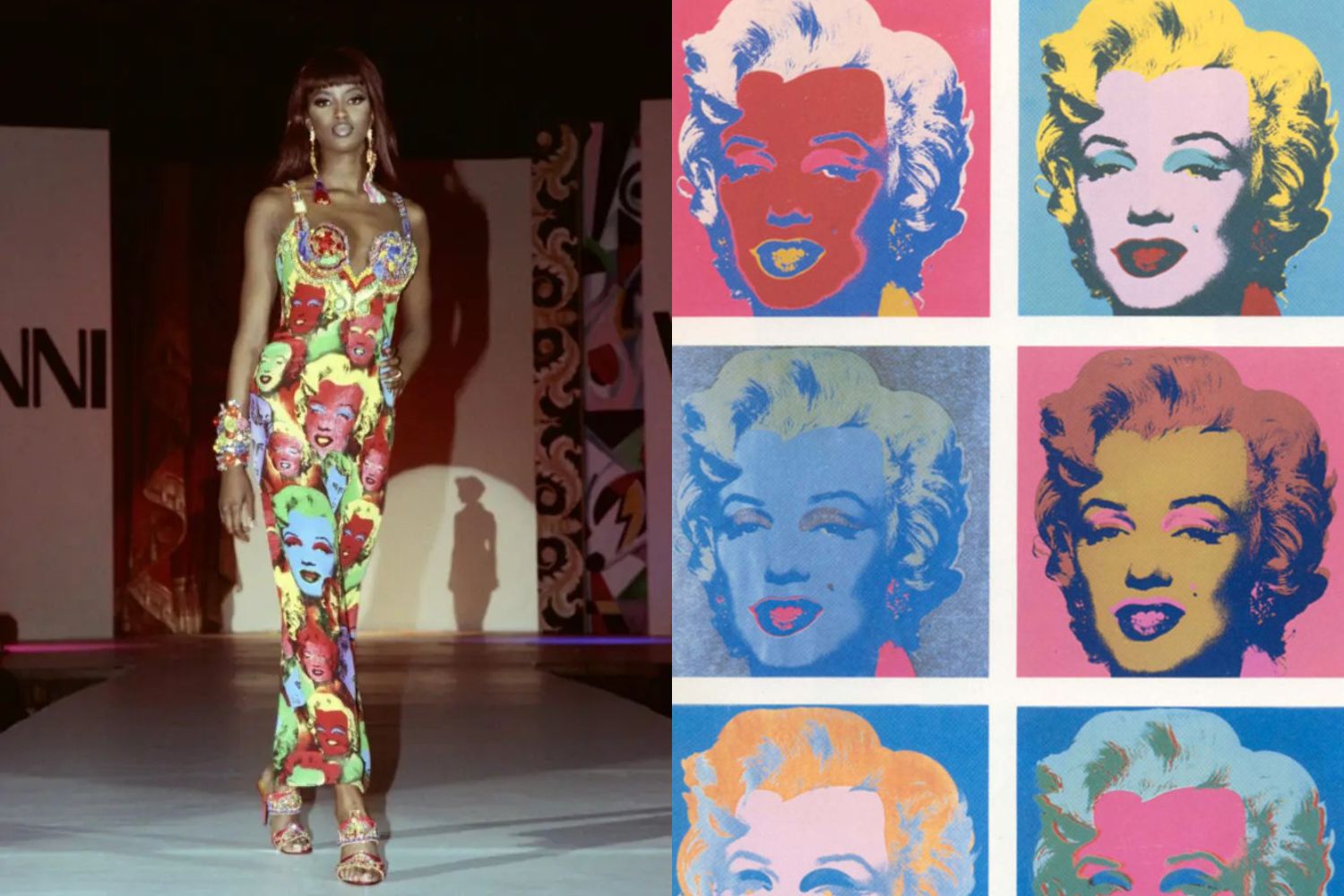
Gianni Versace and Andy Warhol shared an affinity for bold visual language – Versace with his baroque motifs and Warhol with his Pop Art. In 1991, Versace set aside his usual Magna Graecia aesthetic and incorporated Warhol’s style of silkscreen portraits to create prints of Marilyn Monroe and James Dean onto evening gowns, leisurewear, and workwear.
Vivienne Westwood Fall/Winter 1995 – François Boucher
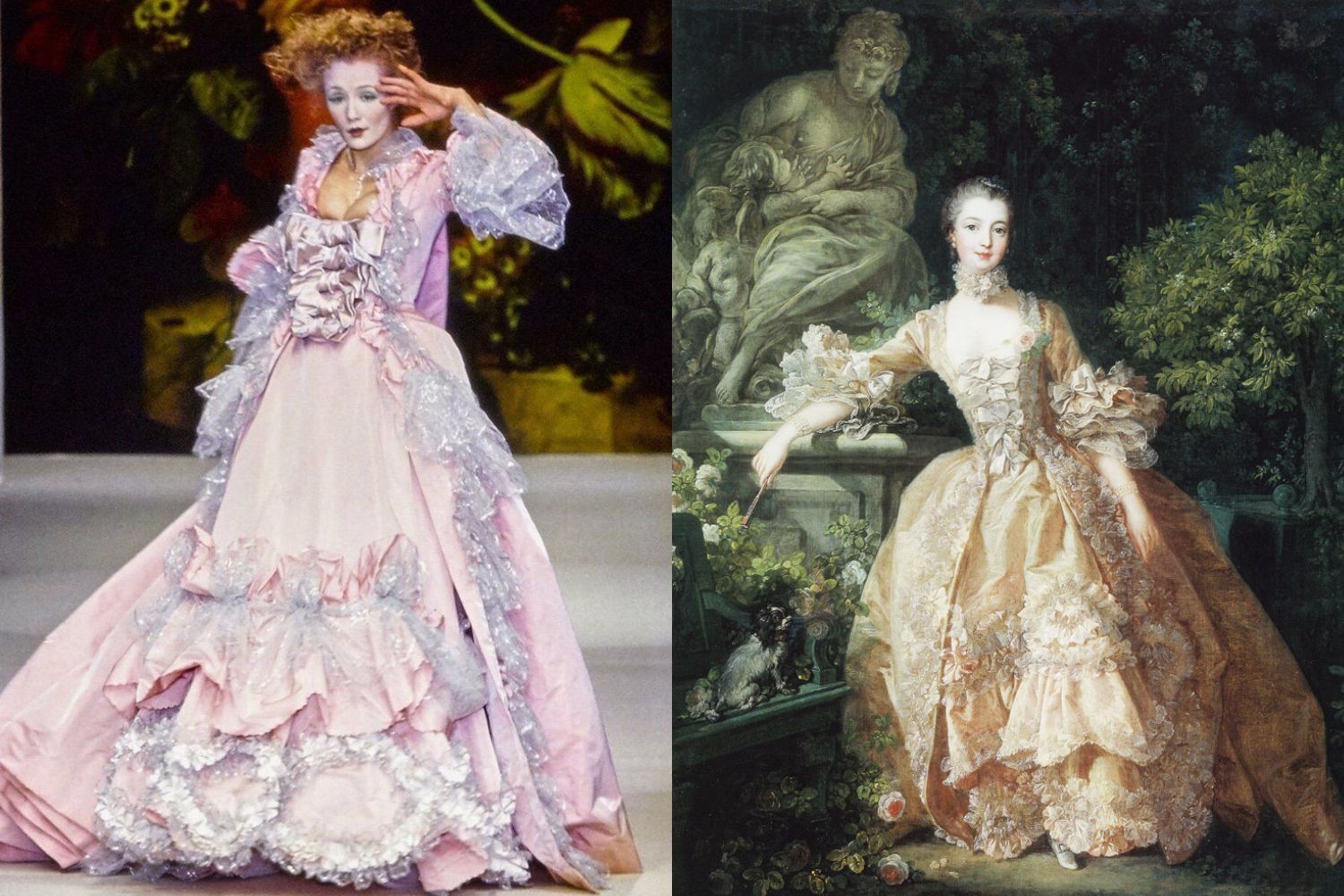
The late legendary Vivienne Westwood frequently drew from Rococo influences for her designs. With her interest in voluminous silhouettes, the designer brought the gowns from François Boucher’s paintings to life, particularly in her collections from 1990, 1993, and 1995.
Jean Paul Gaultier Spring/Summer 2003 Couture – Edgar Degas
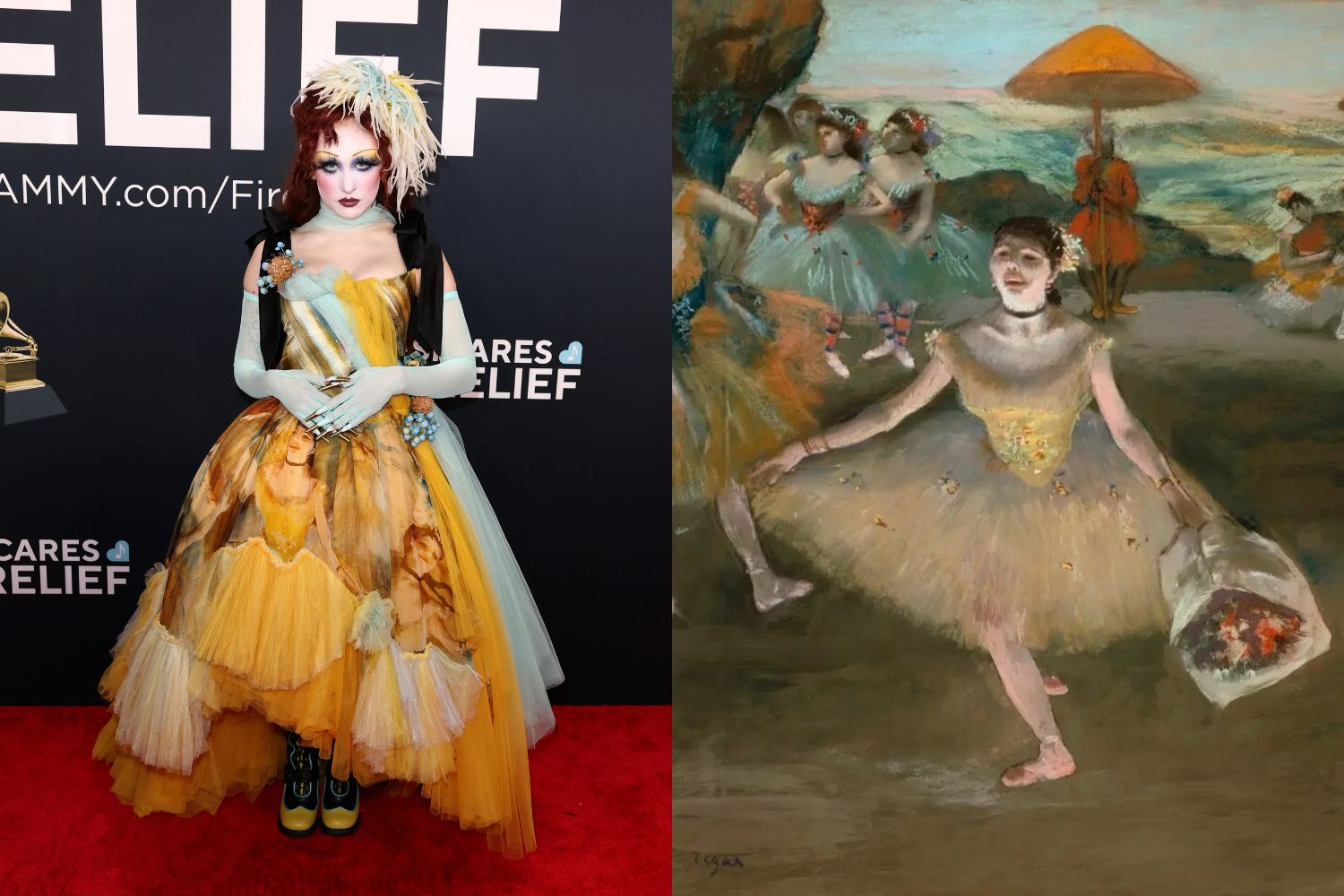
Reinterpreting Edgar Degas’ pirouetting ballerinas, Jean Paul Gaultier captured the essence of the French impressionist’s Dancer With a Bouquet on the Stage and brought it into couture through tulle tutus and vibrant floral embellishments. Chappell Roan was one of the latest celebrities to wear the archival piece on the red carpet at the 2025 Grammys.
Discover more fashion stories here.