




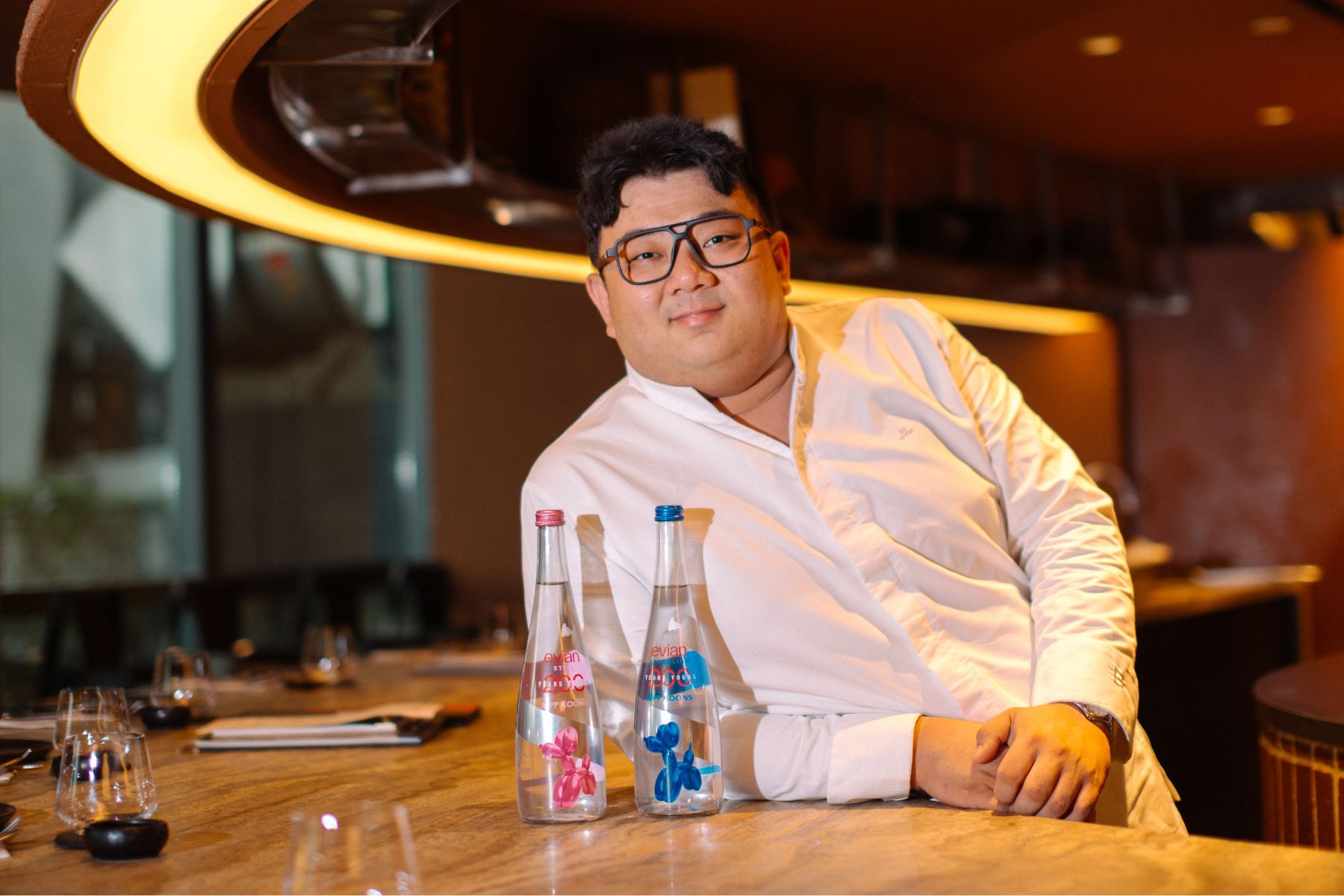


At just 29, running three restaurants is no small feat, particularly in an industry where keeping one kitchen moving is demanding enough. Even during our visit to BarKar, Lee moves comfortably between conversation and pose, seemingly well accustomed to the attention that comes with being one of the younger names making an impression on Malaysia’s dining scene.
Yet behind the growing profile is a chef still driven by curiosity – particularly when it comes to ingredients, their origins, and the stories they carry.
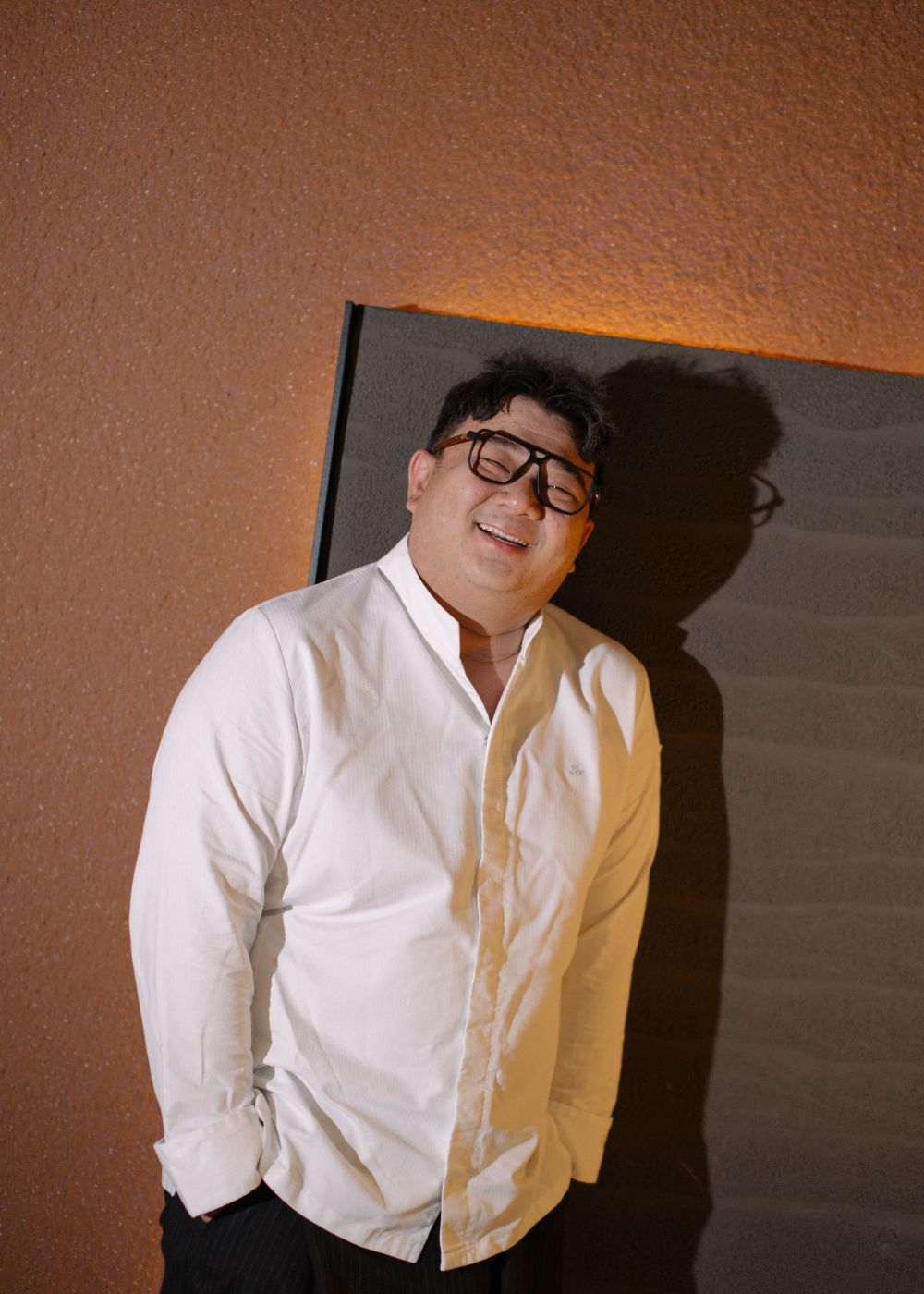
With BarKar among 20 restaurants across Malaysia offering evian’s limited-edition 200 Years Young collection this September, we take the opportunity to sit down with Chef Lee Zhe Xi. He reflects on the journey that brought him here, the lessons that have shaped him as a chef-owner, and his vision for the upcoming Eat and Cook Villa.
A strong belief in the power of food to bring people together has remained a constant throughout that journey, shaping not only the restaurants he creates but also the way he leads his teams. During our time at BarKar, he invited us to stay for the team’s staff meal, offering a glimpse into a close-knit kitchen where conversation, camaraderie and a shared sense of purpose came naturally.
It is a belief that has stayed with Lee throughout his journey, from his earliest experiences with food to the restaurants he leads today.
A journey of discovery
The decision to become a chef came early. Growing up, Lee spent time beside his grandmother in the kitchen, helping her prepare food, and seeing first-hand how a meal could bring family together. Cooking, he learned, was never simply about feeding someone. It was also a way of showing love and creating a reason for people to gather.
Lee began his journey working part-time at a noodle stall in his kampung before pursuing professional culinary training. He knew from an early age that he wanted to be a chef, but understanding what kind of chef he wanted to become took considerably longer.
Eat and Cook emerged during one of the most uncertain periods of his life. When the pandemic hit, Lee and his culinary school classmate and business partner Chef Soh Yong Zhi found themselves without jobs and with very little money. They came across a small space in a quiet mall with affordable rent and decided to take a chance.
“There wasn’t some huge business plan behind it. We just wanted a place where we could cook what we believed in,” Lee recalls.
What began modestly gradually gained recognition, giving the team confidence to explore Malaysian food on their own terms. Eat and Cook became a space for progressive dining and storytelling, while also proving that Malaysian chefs could develop a distinct voice rooted in their own experiences.
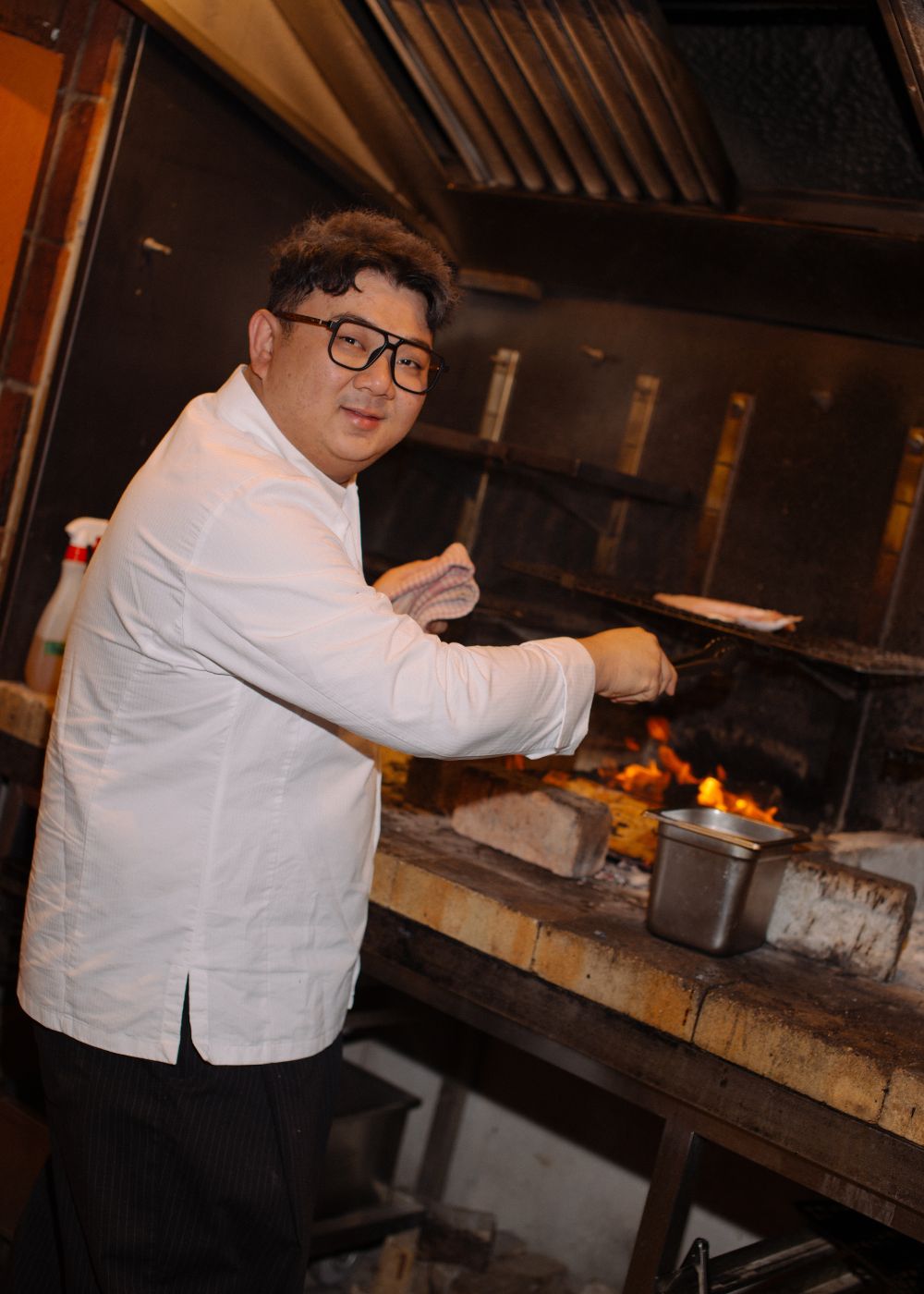
BarKar, on the other hand, emerged from a different curiosity. During a trip to Bangkok after receiving an American Express One to Watch recognition, Lee watched street vendors cooking over fire while he ate beef noodles. That scene inspired the concept for BarKar, a play on the Malay word bakar, meaning to grill or burn.
Where Eat and Cook explores storytelling through progressive dining, BarKar takes a more primitive and communal approach, placing fire at the heart of the experience. “Fire is probably one of the oldest connections between cooking and humanity.”
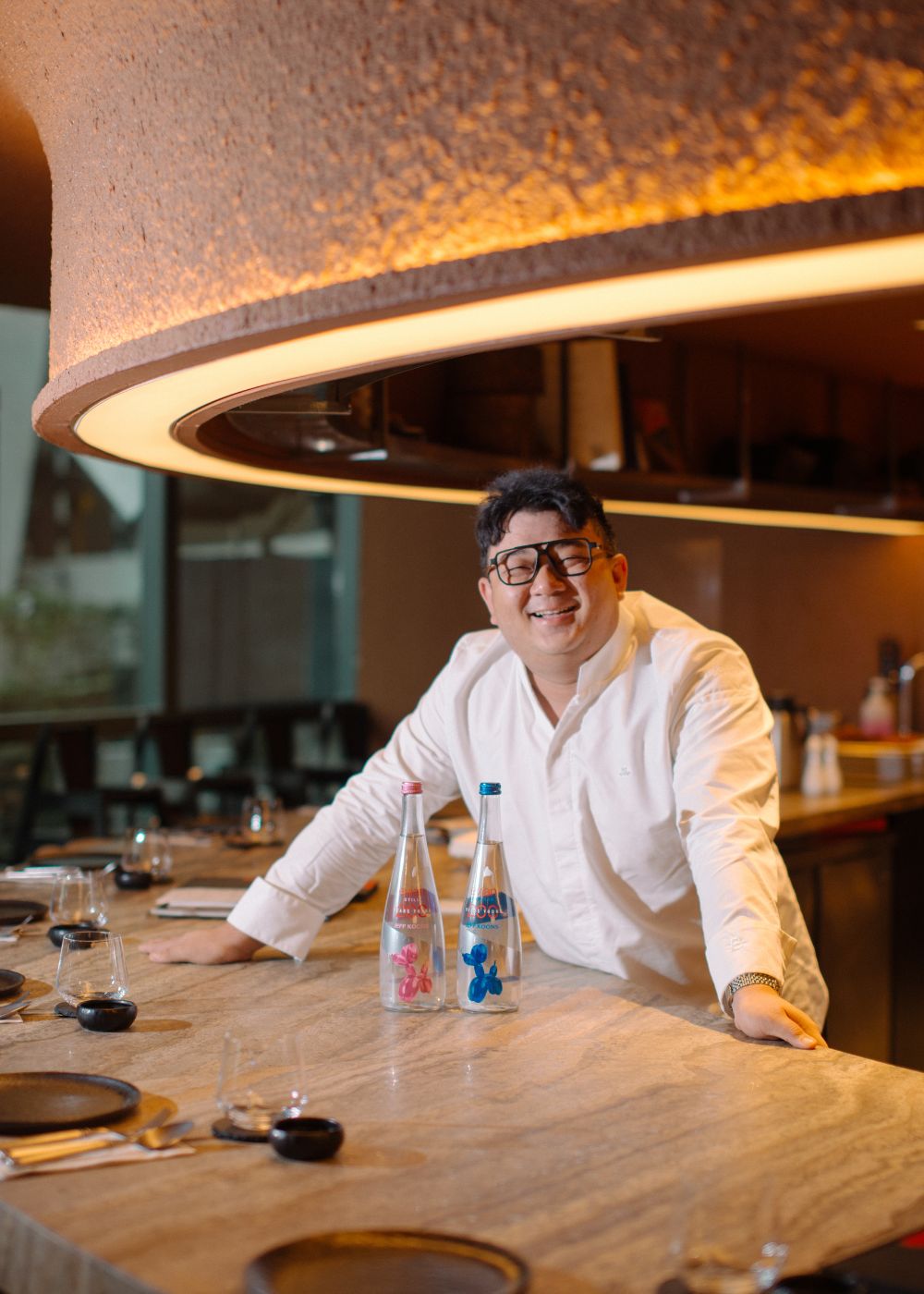
The idea goes beyond the technical craft of grilling, smoking, charring, and ageing ingredients. At BarKar, an open kitchen and circular chef’s counter bring diners closer to the cooking, allowing them to see, smell, and experience the process while sharing the table with others. “The fire is in the middle, but people are really the centre of BarKar.”
Growing as a chef and leader
Building a restaurant is one thing, but growing one while staying true to its original identity is another. As Eat and Cook and BarKar developed, Lee found himself moving beyond the kitchen. A growing team, suppliers, partners and guests all came with their own needs and expectations, making it impossible to approach leadership in the same way he once approached cooking.
“I used to think that if I worked harder, I could solve every problem myself. I eventually realised that’s impossible,” he reflects. Learning to delegate, communicate, and trust the people around him became an essential part of that growth.
It also changed his understanding of what it means to be a chef-owner. Technical ability alone does not make someone a good leader; understanding people, their motivations, and their strengths matters just as much. That evolution has also changed the way he thinks about cooking itself.
Early in his career, he was fascinated by European ingredients and techniques, from foie gras to truffles. It was an encounter with an Argentinian chef and a simple local ingredient, however, that made him question how well he really knew his own culinary identity. When the chef asked about buah kulim, Lee realised he did not know the answer.
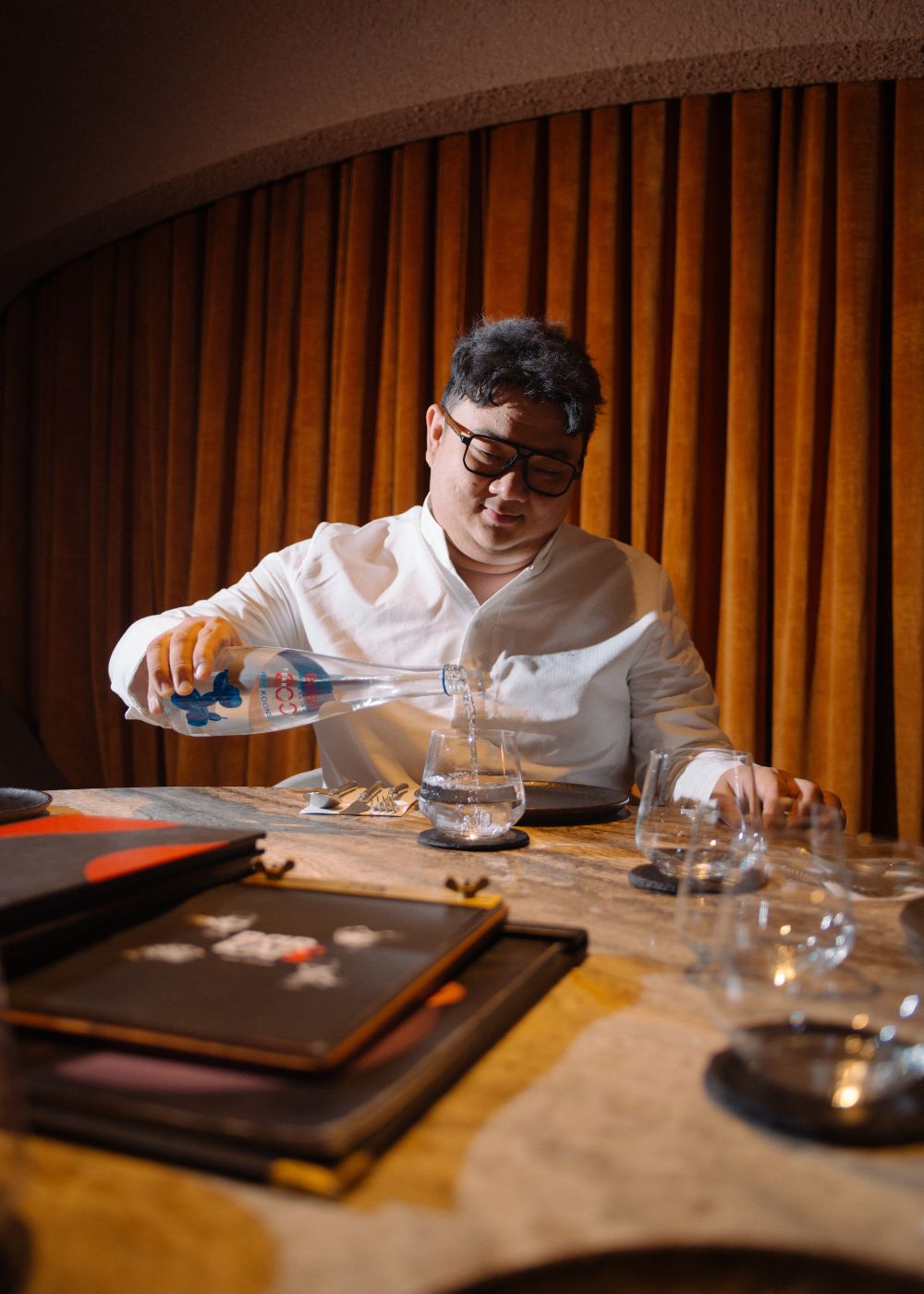
The experience stayed with him, sparking a deeper interest in Malaysian ingredients, the people behind them, and the reasons behind traditional food. Rather than simply modernising familiar dishes, Lee is more interested in understanding where they come from and why they exist in the first place.
“I don’t want to copy tradition exactly, but I also don’t want to change something simply to make it modern. First I want to understand why. Then we can ask what comes next.”
That curiosity has become an important part of his approach. It has also taught him that there is value in admitting what he does not know. The more he learns, the more he recognises how much remains to be explored.
The next chapter: Eat and Cook Villa
The upcoming Eat and Cook Villa represents another evolution of the restaurant rather than simply a move into a bigger space. “We’ve changed. The team has changed. I’ve changed. And my understanding of Malaysian cuisine has changed.”
The original Eat and Cook was built with little money but plenty of hunger, curiosity, and willingness to experiment. Now, with more experience and resources, Lee wants to ensure that growth does not lead to comfort. What he hopes to preserve is that original spirit to keep exploring and the courage to try, fail and question. “The building can change. The soul cannot.”
The Villa will give the team more room to explore the ingredients, preservation, fermentation, producers, and stories that continue to shape Malaysian food. The intention, however, is not to turn these traditions into something static. Instead, the team wants to understand them deeply and explore how they can continue to evolve.
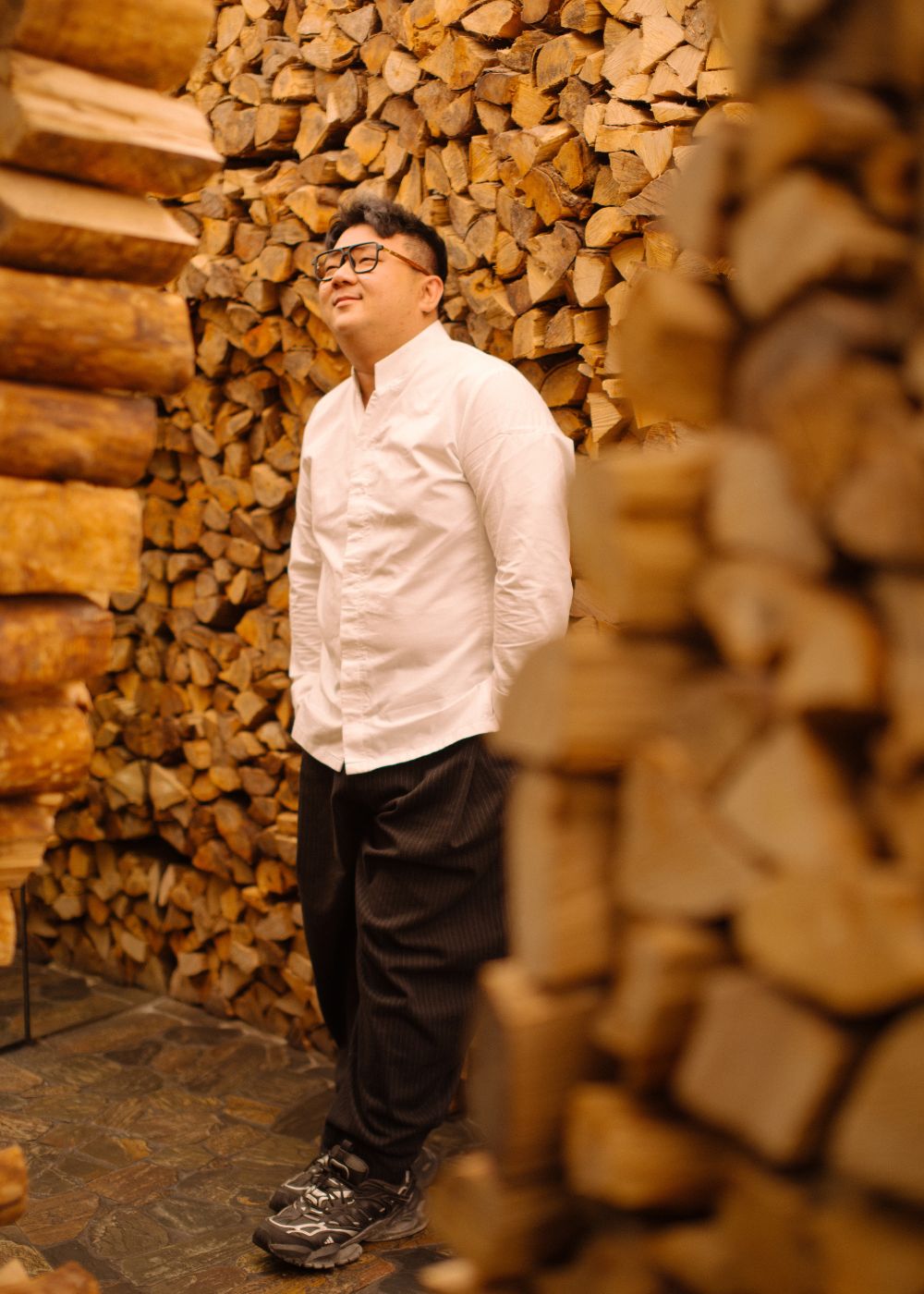
As anticipation builds around the Eat and Cook Villa, the hope is that guests leave with a deeper sense of Malaysia, whether through an unfamiliar ingredient, a traditional technique, a local producer, or a familiar flavour presented from a new perspective.
Lee also describes the Villa as a home for Eat and Cook, where hospitality begins from the moment a guest arrives, rather than only when the food reaches the table. Above all, he hopes that even if guests do not remember every ingredient or dish, they will remember the people they shared the experience with, the smell of the kitchen, a conversation with someone from the team, or simply how Eat and Cook made them feel.
With three restaurants behind him and Eat and Cook Villa ahead, Lee is still driven by the same hunger that started it all: to bring people together and discover what Malaysian food can become.
Keep up with Chef Lee Zhe Xi here, and stay tuned as Eat and Cook enters its next chapter with the upcoming Villa.
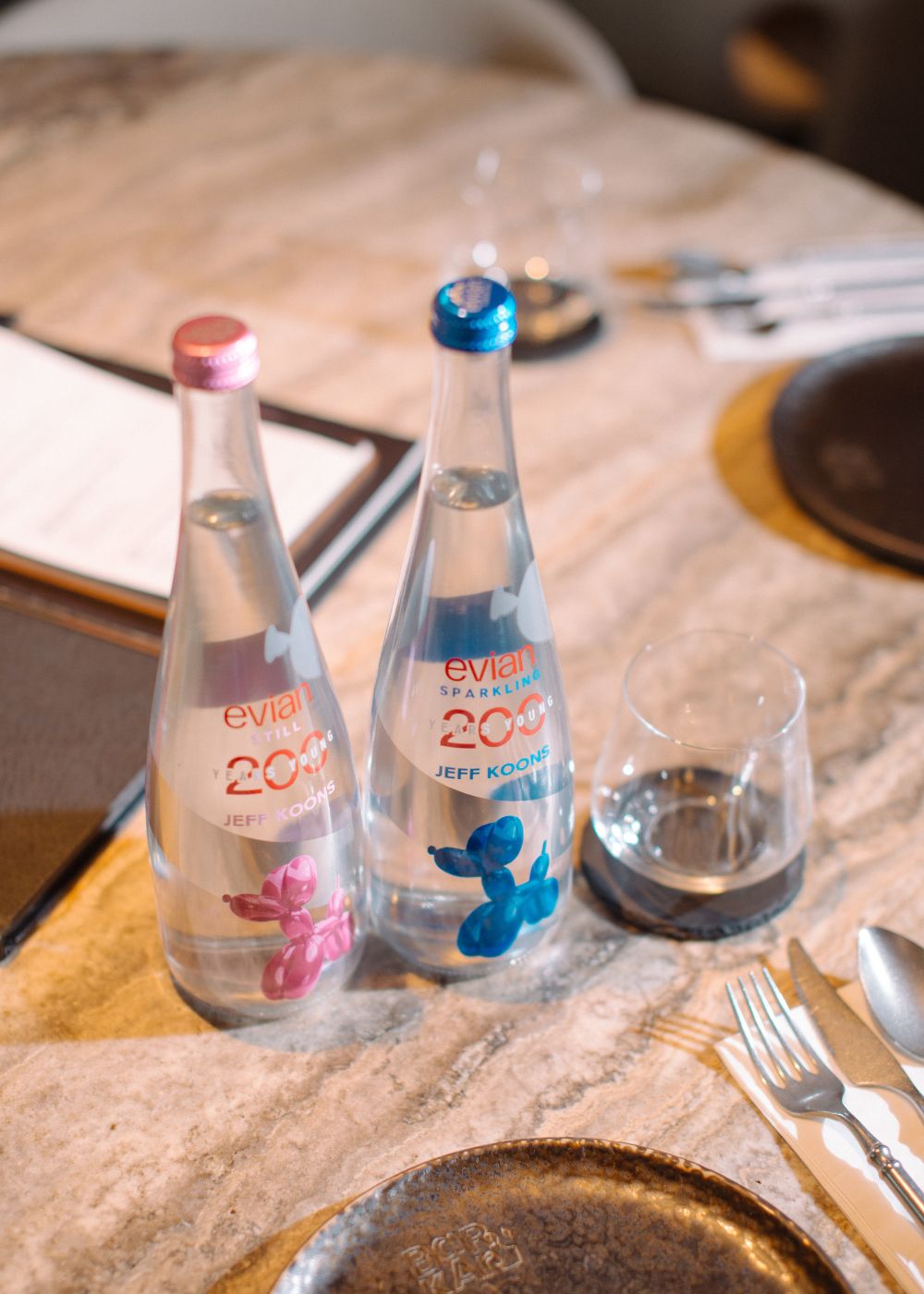
Celebrating 200 Years Young, the limited-edition evian x Jeff Koons glass bottles feature the artist’s iconic ‘Balloon Dog’ in two distinctive designs: soft pink Still and vibrant blue Sparkling.
Head to BarKar throughout September to get your hands on the limited-edition bottles, available while stocks last.
Discover more inspiring people stories here.
Photography by Imran Sulaiman.