







Fast fashion remains popular in the 21st century with its repetitive smart-casual staples and cheaply made pieces driven by low prices. Amid this cycle, however, Madam Yu Lin, the third-generation custodian of Ang Eng Nyonya Kebaya, remains steadfast in her devotion to traditional craftsmanship, preserving the artistry and heritage of the Nyonya kebaya. “It’s already in my blood,” she explained plainly when asked how her passion first sparked.
Kebaya has long captivated the world with its elegant silhouette, intricate craftsmanship, and rich cultural legacy. It carries centuries-old artistry and national pride, providing a glimpse into the rich tapestry of Southeast Asian tradition. That is why, for Yu Lin, education is key. “I’m trying to teach the new generation that kebaya isn’t just something you wear. It has a story and sentimental value.”
Unveiling a world of kebaya motifs
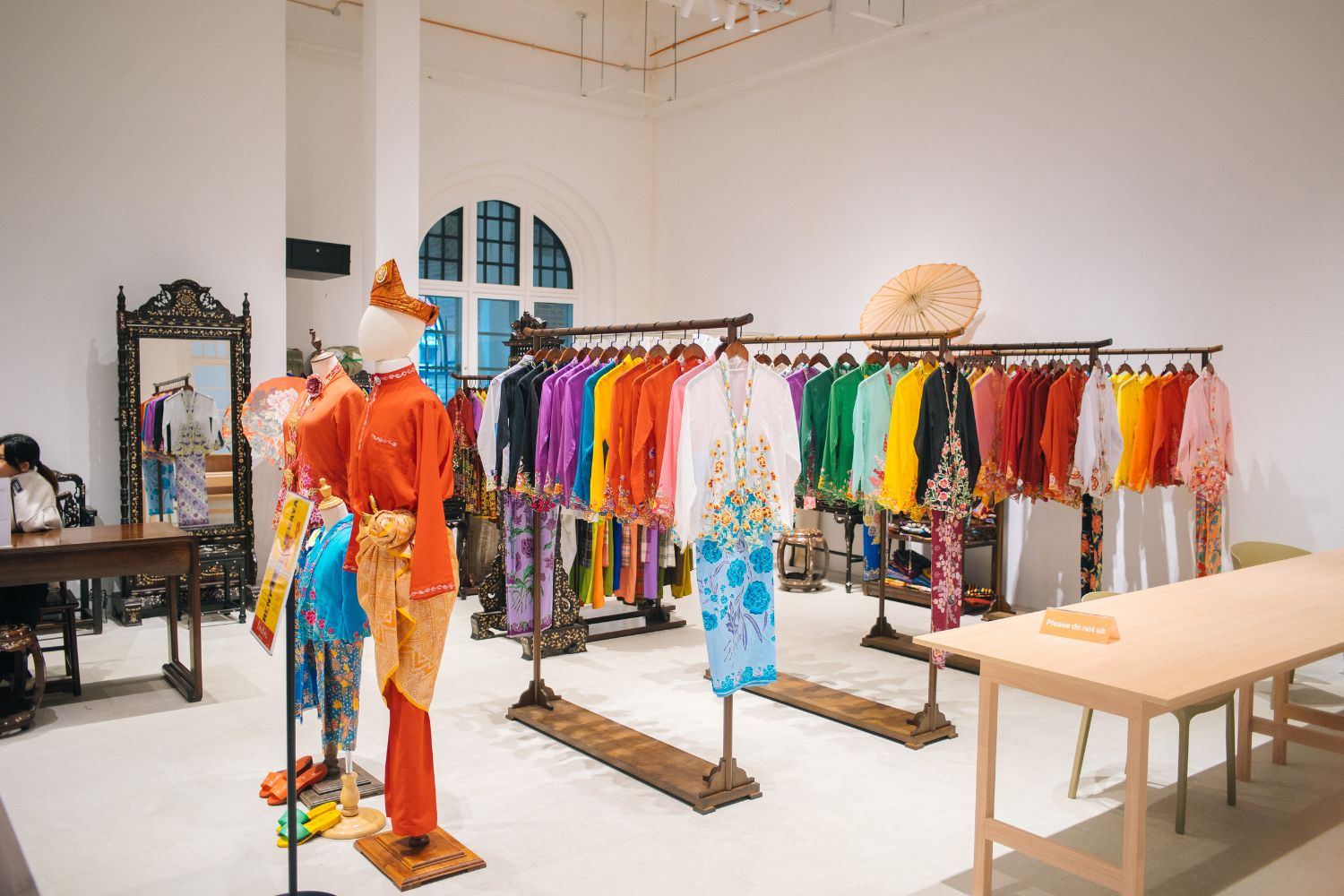
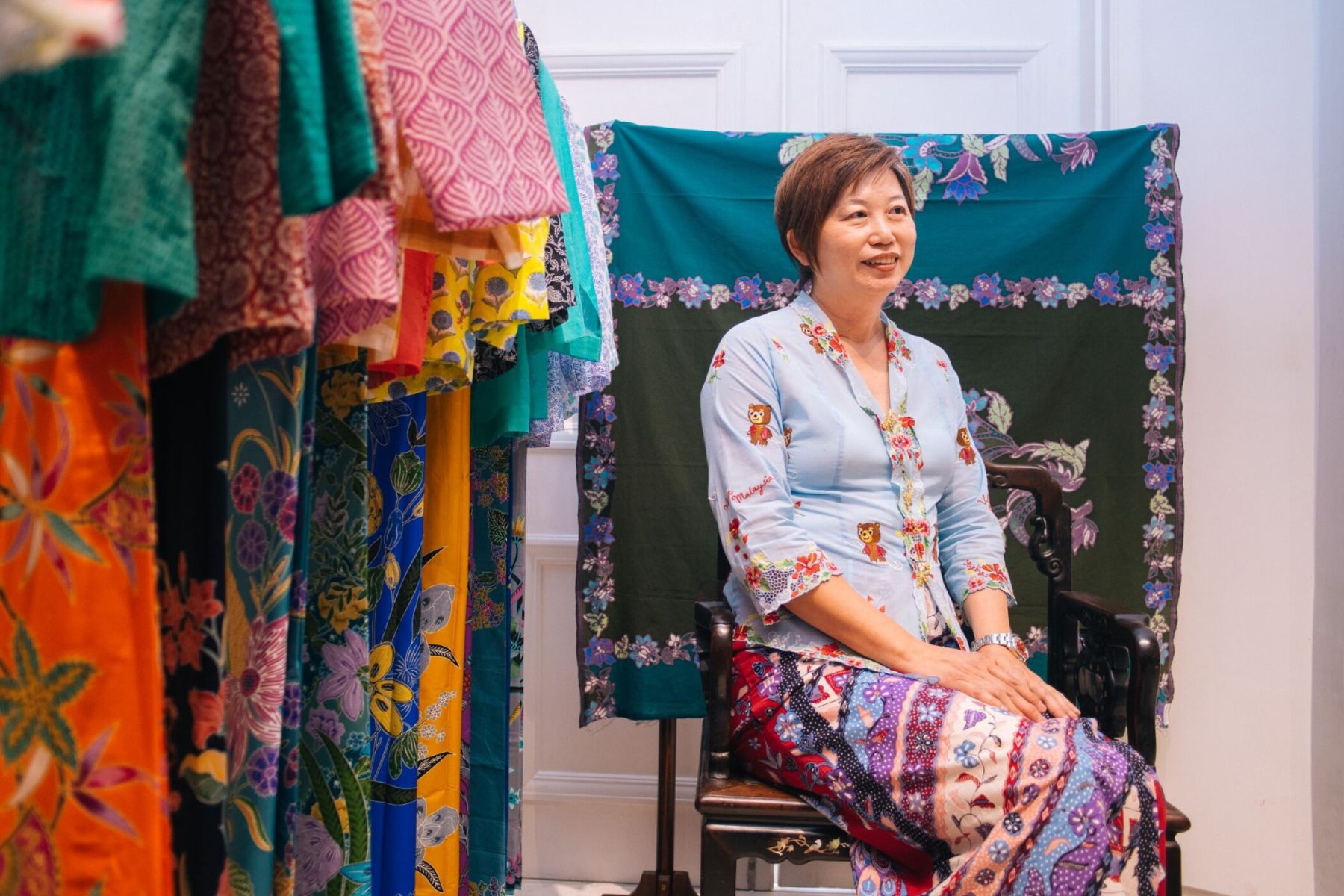
As we stepped into the Ang Eng Nyonya Kebaya store at the newly opened Bangunan Sultan Abdul Samad, it was evident that their approach to kebaya offers something unique that you won’t be able to find elsewhere. Yu Lin plays a lot with her embroidery designs, where you can find rather interesting motifs, such as the traditional kuih, ‘Merdeka Day’ themed symbolism, and koi fish that are threaded neatly on the lapels. “I want to make the kebaya different; hence why I put all the different graphics. Specific motifs, such as the ones representing Merdeka, can represent a particular moment or festivity.”
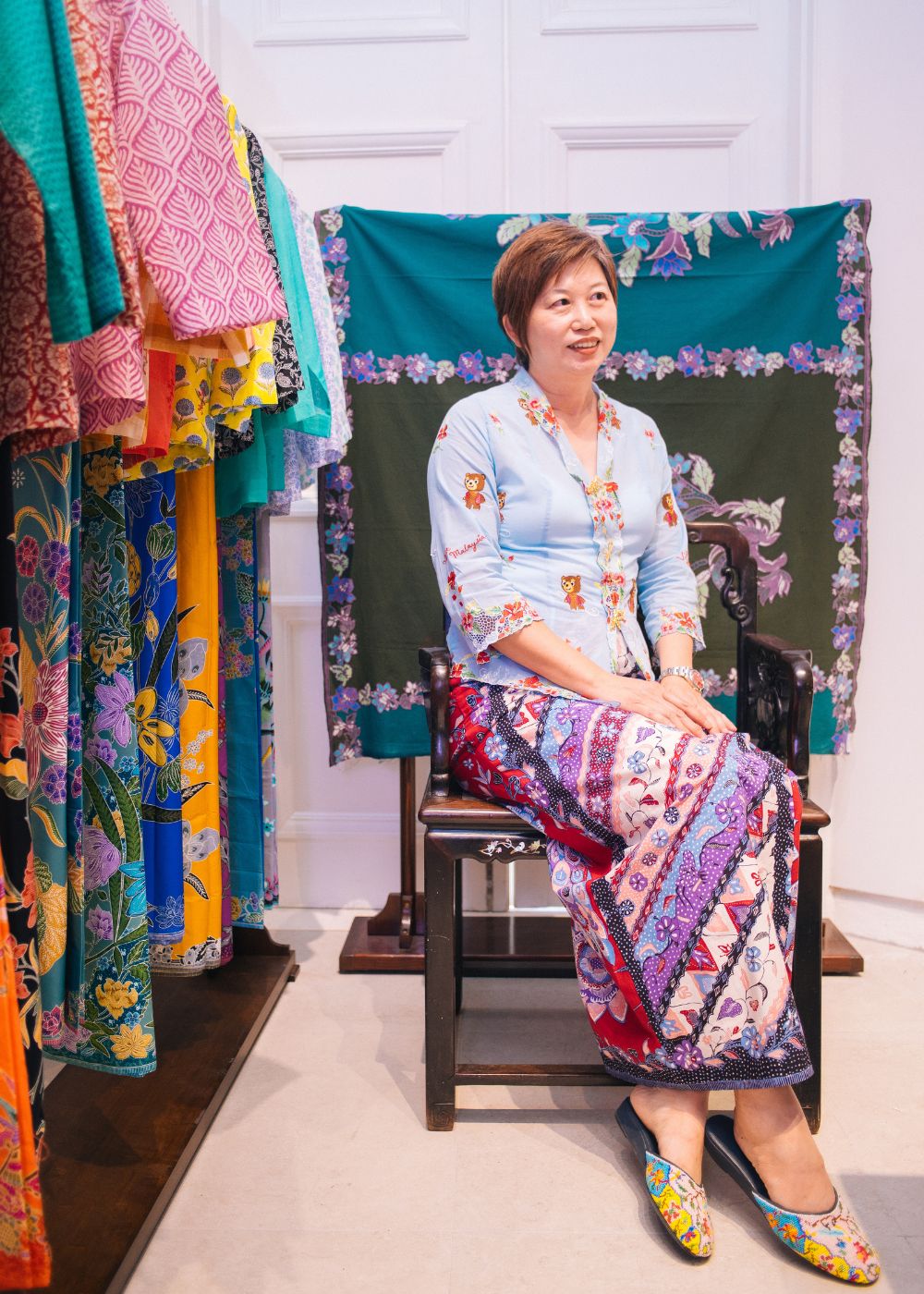
We also noticed that she was wearing a light blue Nyonya kebaya, which beautifully suits her skin tone, with the Visit Malaysia 2026 sun bear mascots, Wira and Manja, embroidered across the blouse. It is the Visit Malaysia year, after all, and she explained her sense of responsibility to promote it as a Malaysian. “I embroidered the mascot into the kebaya so people – especially young people – can see that kebaya is actually very fun.”
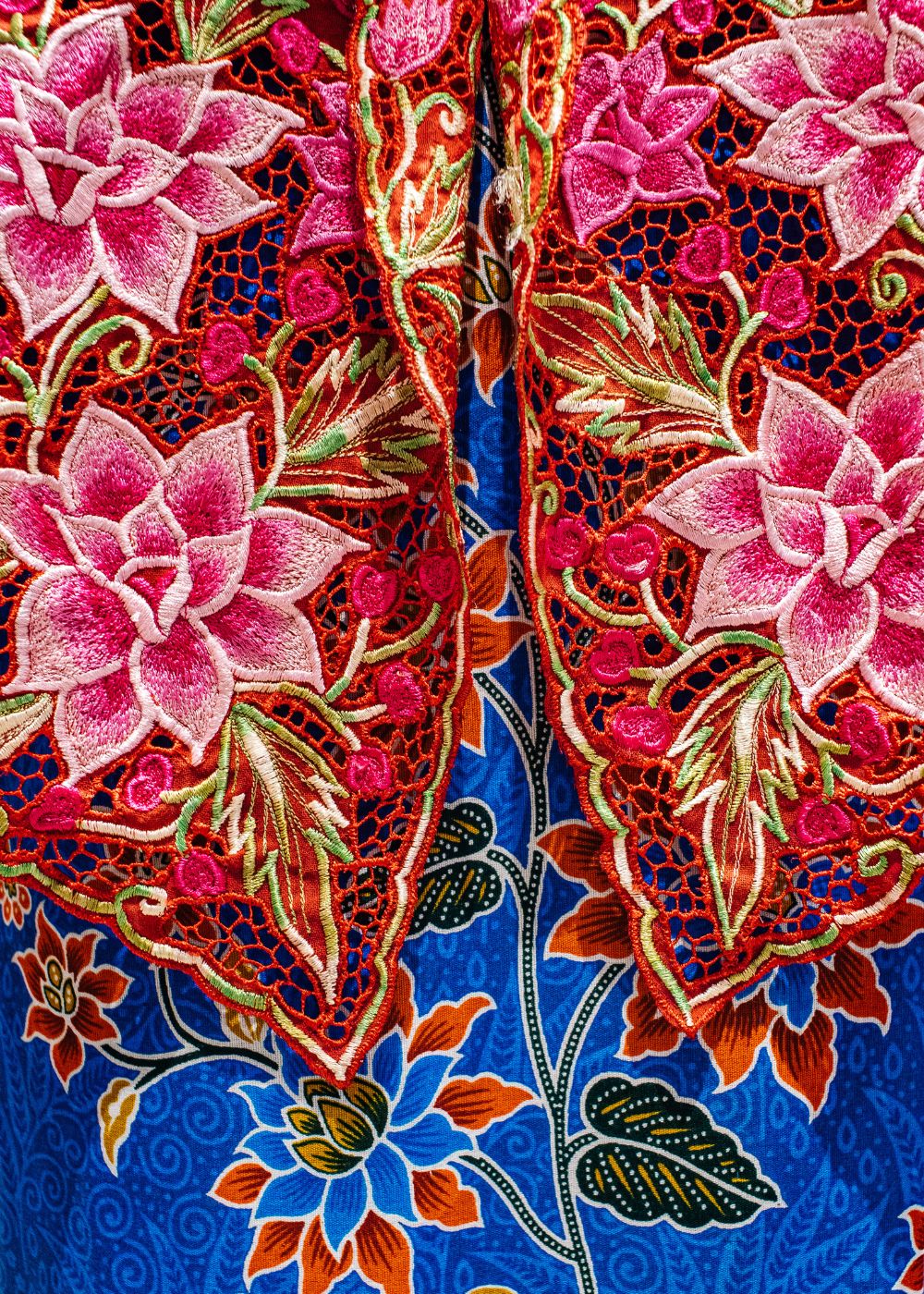
Malaysian kebayas traditionally feature floral motifs, a signature that Yu Lin herself upheld for years. But it was not until the pandemic that she began to explore different detailing for her kebaya pieces. It began when a customer requested a kebaya for Christmas that featured snowman illustrations. It made her realise that personalisation can further elevate the meaning of the kebaya, as it can be distinctive to the particular celebration. Then, inspiration sparked, and she started to make new motifs as the Chinese New Year season approached. What followed became an endless canvas for her imagination, marking her departure from conventional floral designs.
Even then, we wondered how she usually finds inspiration for the unique Nyonya kebaya patterns. To put the answer simply: while some people write about their experiences and memories in journals, she chooses to put them in her kebaya. “Last year, I went to China and made a kebaya motif of the Great Wall of China and the Chinese opera. This way, I have something to remember it by,” she said. But that is only a fraction of what she intends to do. Her ultimate goal is to insert elements from around the world, broadening the target audience for Nyonya kebaya across different cultures.
Reimagining the traditional Nyonya kebaya for the modern age
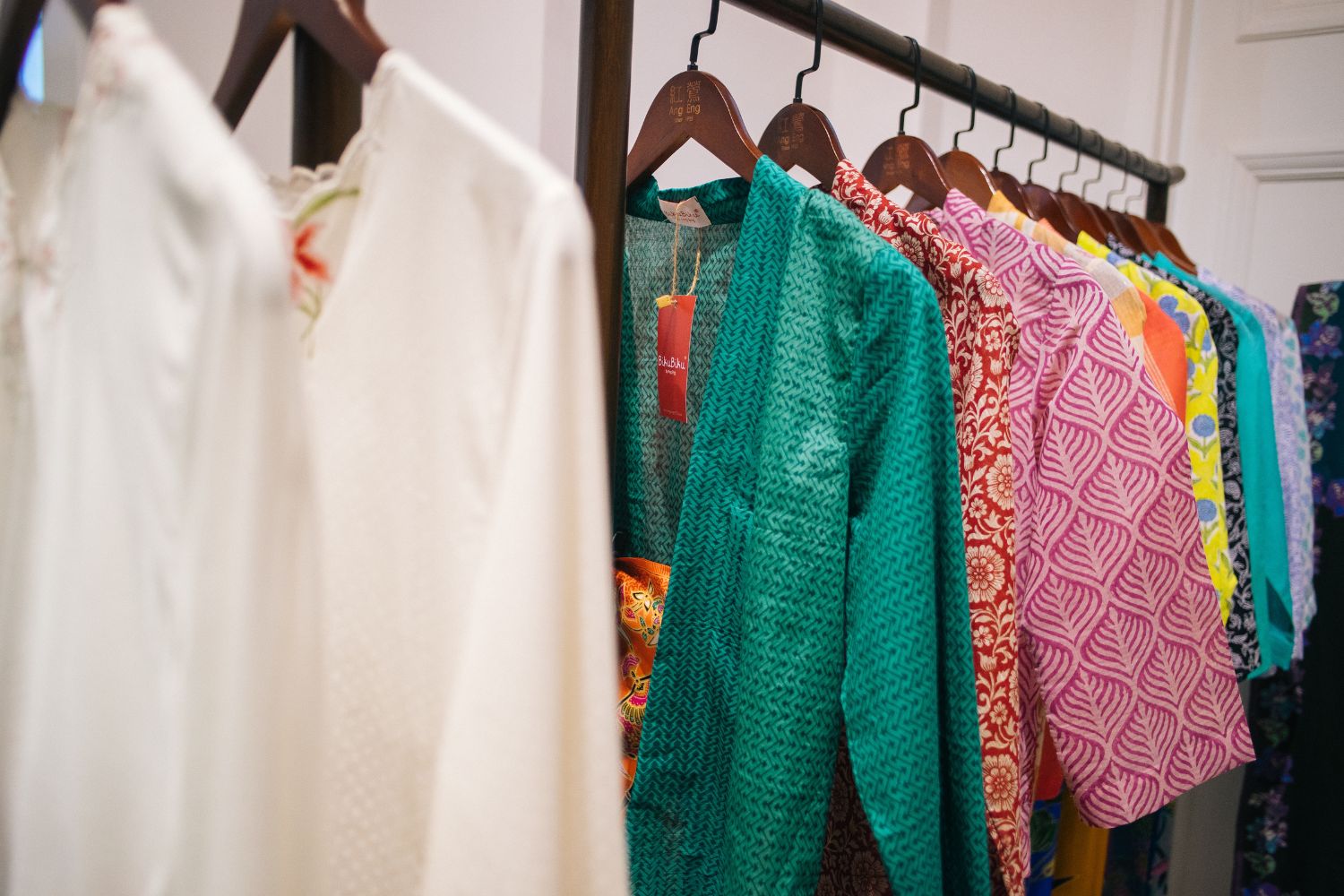
Another intriguing offering that can be found at Ang Eng Nyonya Kebaya is Biku Biku, a subline for their more affordable and casual pieces, where Nyonya kebaya prints are incorporated onto the T-shirts to spread awareness. “We first created Biku Biku for our T-shirts to make something wearable for everyone,” Yu Lin explained.
For three generations, Ang Eng has been making Nyonya kebaya the traditional way, and Yu Lin intends to continue the legacy that has been passed down while also adding collections with a modern twist for today’s market. Biku Biku, for example, offers a wide array of silhouettes and designs suited for everyday wear and perfect for a more versatile styling. “I want to do both – I’m very greedy,” she said jokingly. She also acknowledged the fact that solely maintaining the traditional Nyonya kebaya is no longer sufficient for the brand. “Zaman sudah tukar (The world has changed).”
For her newly opened store at Bangunan Sultan Abdul Samad, she even made the smart move of offering a Nyonya kebaya rental service under the Biku Biku subline. “We make sure the colours match to display a story. We also take care of the kebaya and will sanitise them afterwards.” Kebaya enthusiasts only need to pay RM80 for three hours for a high-quality kebaya. It’s definitely worth the price.
Nurturing the younger generation
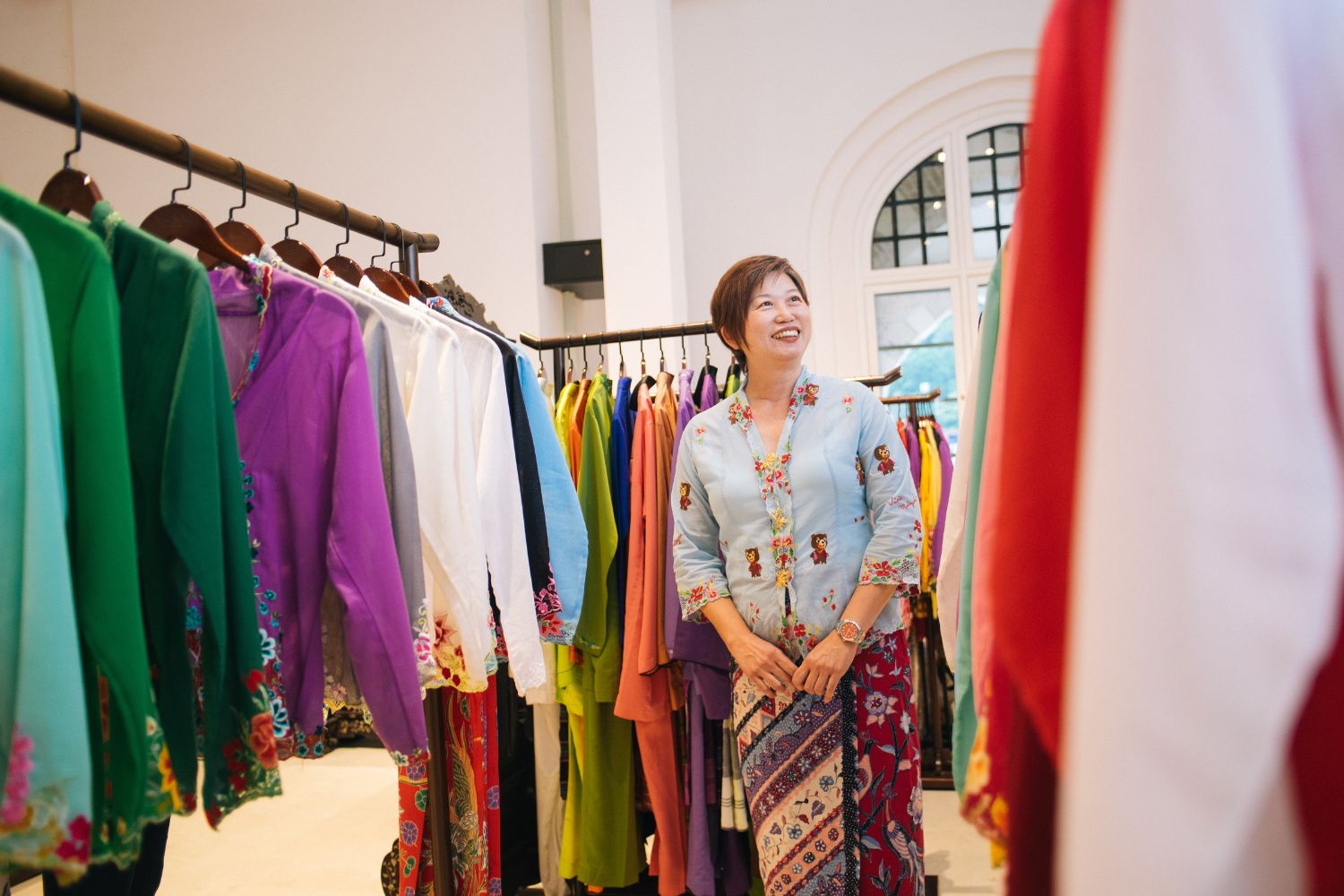
Yu Lin mentioned educating people about traditional wear several times, which clearly showed how much it means to her. When asked about what she likes or dislikes when seeing people wearing Nyonya kebaya, she immediately dismissed it. “I think people can wear Nyonya kebaya however they like to,” she said. “As long as they feel confident and happy, then it meets our goal.” She added that it was refreshing to see how women today creatively match modern fashion with traditional wear, and hopes to see more of it. “Maybe it’s harder to walk while wearing the traditional Nyonya kebaya, so you can wear it however you want – with jeans, a jacket, or even a T-shirt with a matching sarong. Your uniqueness is what makes you stand out.”
She also strongly believes that everyone should have at least one traditional outfit, be it a kebaya or baju kurung, to represent their culture. Keeping at least one inherited traditional piece can serve as a reminder of their roots and a way to feel connected to those who came before them. “Sometimes when I see people wearing kebaya, I can feel my grandmother and mother with me, even if they’re not here anymore. This was how they gave us a living,” she shared with slightly teary eyes.
“I hope when people think of kebaya, they think of us.”
Realistically, sustaining a traditional craft in a modern economy presents its own challenges. However, Yu Lin confessed that the biggest challenge is to maintain the traditional hand-embroidery technique, especially as the team of artisans is getting smaller day by day. As such, her greatest hope for the Nyonya kebaya is to preserve the traditional embroidery technique. “I hope people return to the traditional hand-embroidery techniques of the old Nyonya kebaya. Some people prefer not to do it due to the time consumption and lack of patience, but hopefully with awareness and introduction, more people will be interested in learning it the authentic way instead of using a machine.”
Other than manpower, the other biggest challenge is to educate people about its value. In the modern age of cheap fast fashion, the craftsmanship and meticulous labour behind intricate designs are often overlooked. “To introduce kebaya to everyone, we need to tell them about the process so people can understand why authentic kebaya is costly,” she clarified. “Some people don’t really understand the work that goes behind each kebaya – the time spent, the labour, the raw material, and the overall cost.” That was why, for Ang Eng, the kebaya has never been just about profit but also a legacy for future generations.
Follow the journey of Ang Eng here and find more inspiring stories here.
Photography by Imran Sulaiman