




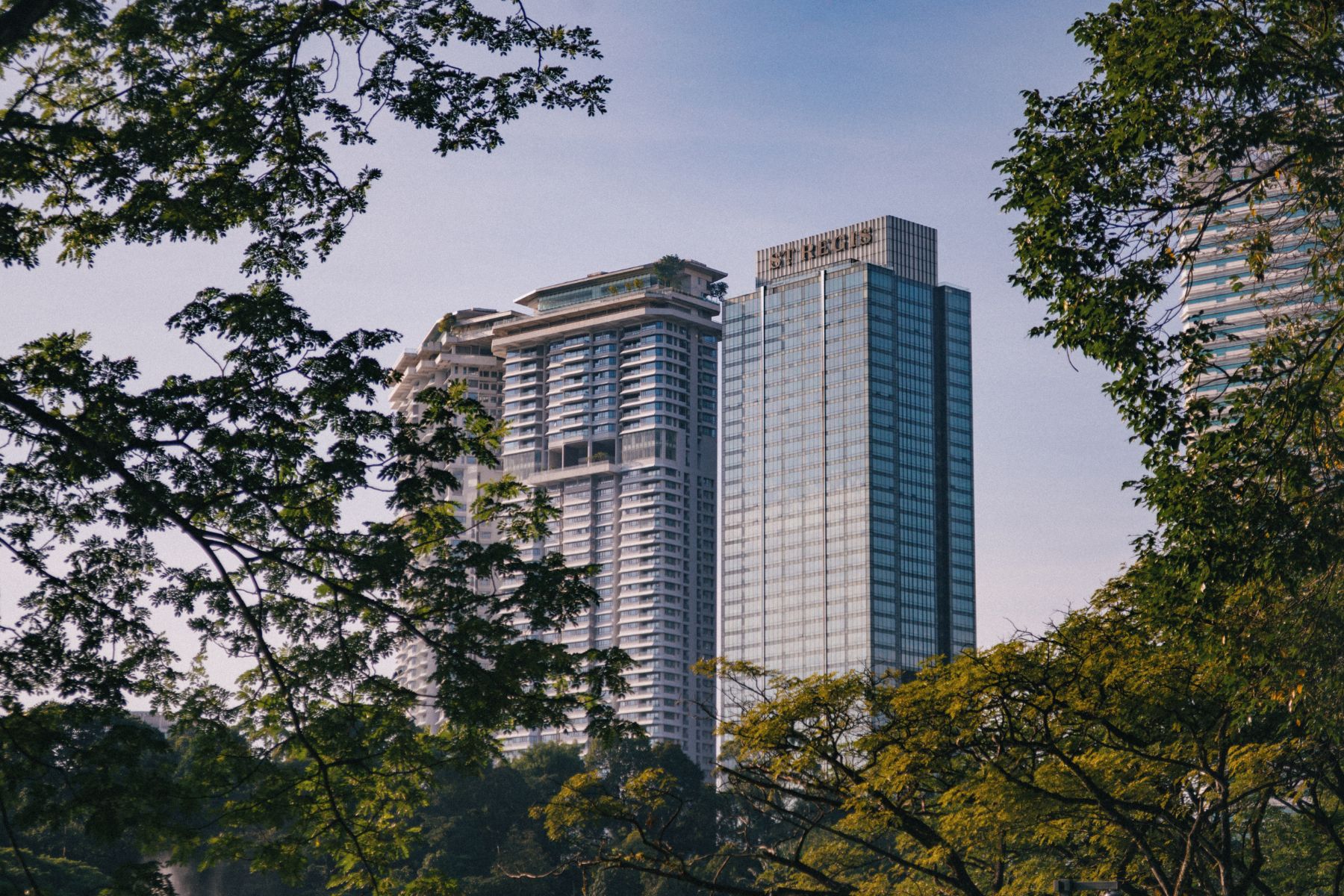



“The St. Regis Kuala Lumpur does not announce itself. It composes itself around you.”
Before the butler greets you, the flowers do – an arrangement on the lobby’s centre table, placed so that everyone who enters meets it first. In this subtle way, you have already been received. The light finds you before the staff does. The scent settles before you reach the desk. The sound of the lobby – faint crystal vibrations, footsteps, the distant register of conversation – arrives already tuned. This orchestration of arrival naturally leads to the hotel’s history.
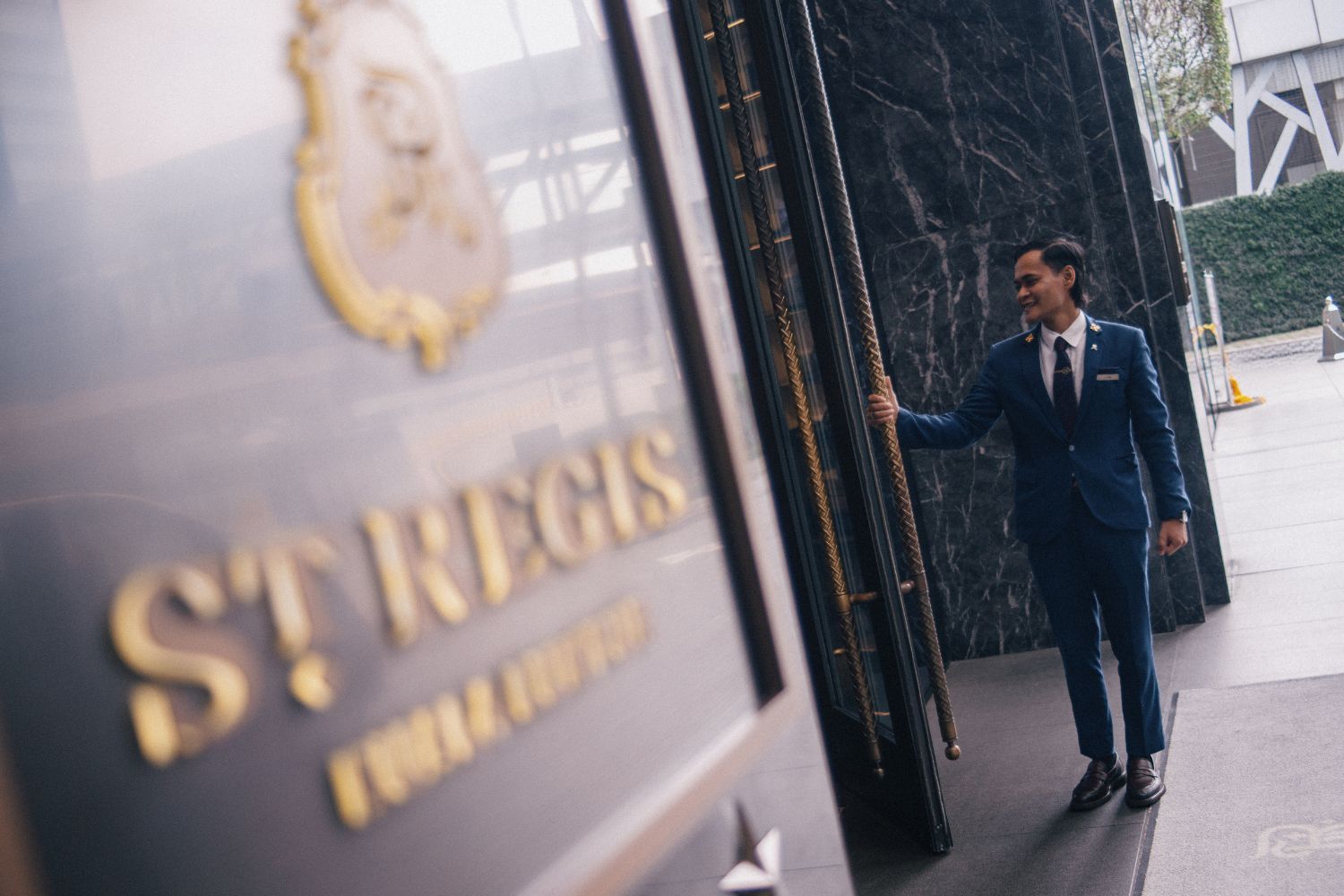
The St. Regis Kuala Lumpur turns ten this year, but the story begins well before 2016. In fact, when Colonel John Jacob Astor IV cut the ribbon on the first St. Regis on Fifth Avenue in 1904, he wasn’t opening a hotel as we generally understand the word today – he was opening a household. Astor wanted to welcome guests as he welcomed them at home – guided by his family’s social calendar rather than by room service and a concierge.
More than a century later, at a different address on the other side of the planet, that founding conviction is still doing its work. Such a legacy is felt the moment you cross the threshold.
Sight
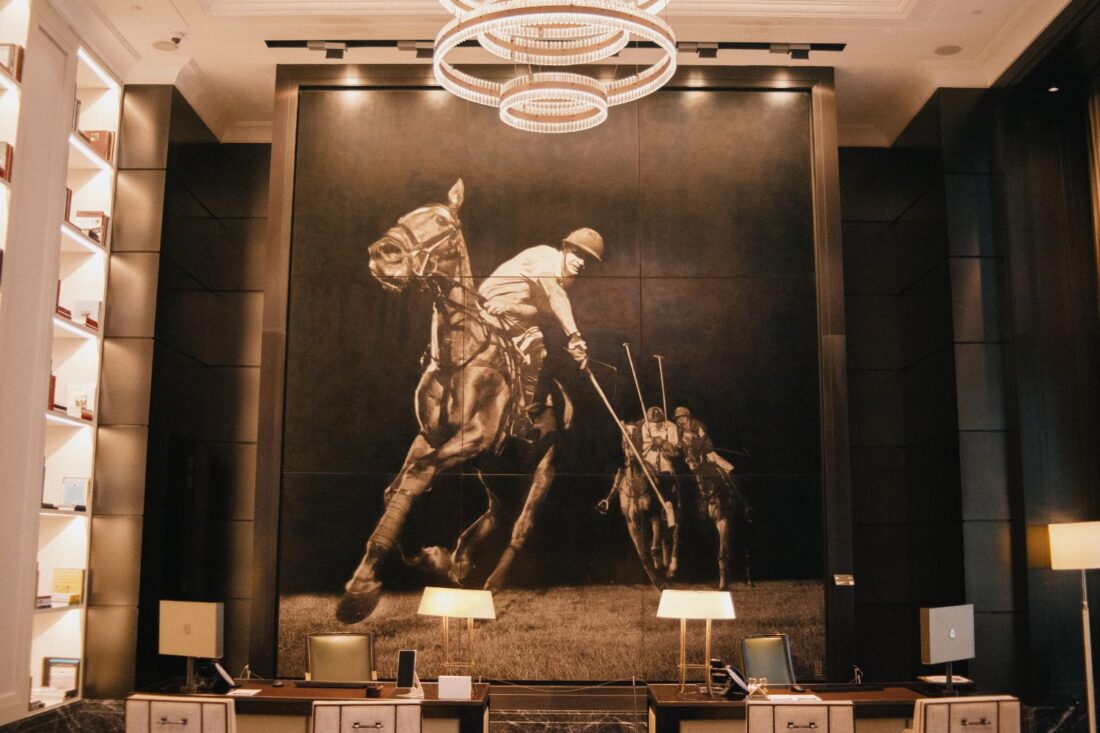
The polo painting welcomes you on the way to reception, the first of many things to pause for.
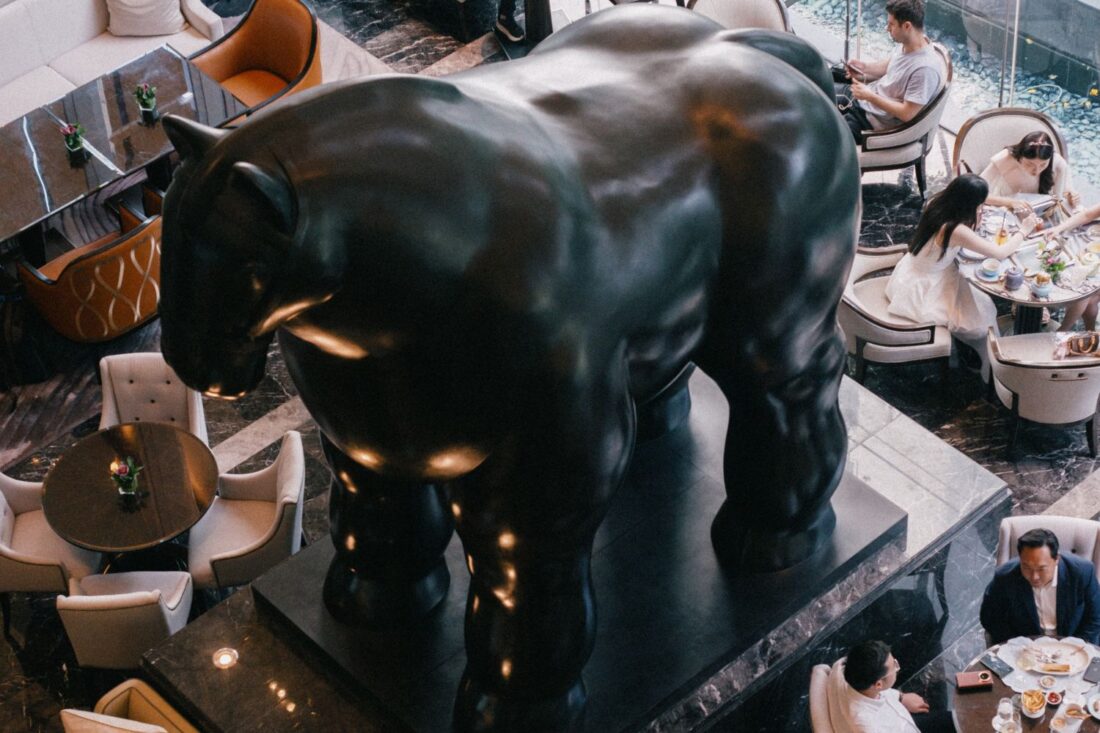
Fernando Botero's bronze horse anchors the Drawing Room, the largest Botero in the world.
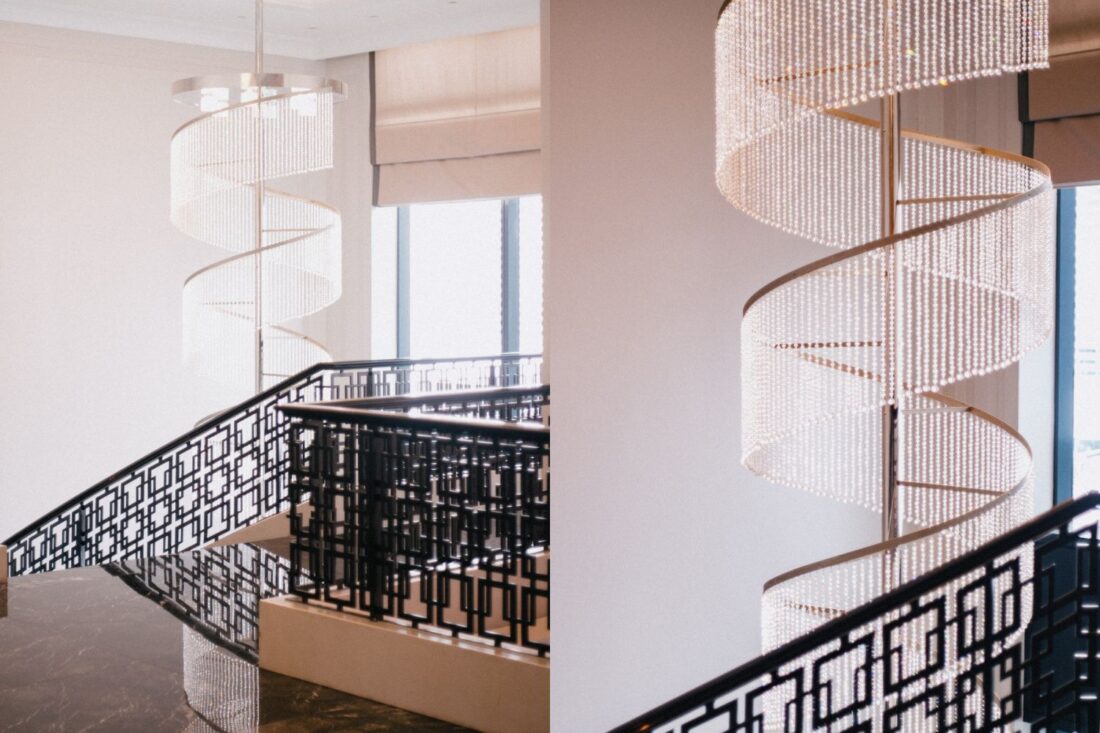
Look up, and a multi-tiered crystal chandelier rises with you, from the floor all the way to the Brasserie.
This hotel does not just show you Kuala Lumpur – it frames it. The symmetry of the architecture compels you to stand straighter, as if drawn up by its insistence. As you step towards the check-in area, a duo of polo paintings catches your attention, breaking the vertical run. Even the way the marble catches the light has been decided.
Intentionality continues in the Drawing Room, where Fernando Botero’s monumental bronze horse stands as the world’s largest Botero at 3.6 metres tall and 2.5 tonnes. The room was not decorated with the sculpture – it was built around it. Just ahead, a multi-tiered crystal chandelier begins at the floor and rises to the Brasserie, a dramatic vertical feature uniting both levels. You may not look at it every time and that, in a way, is the point.
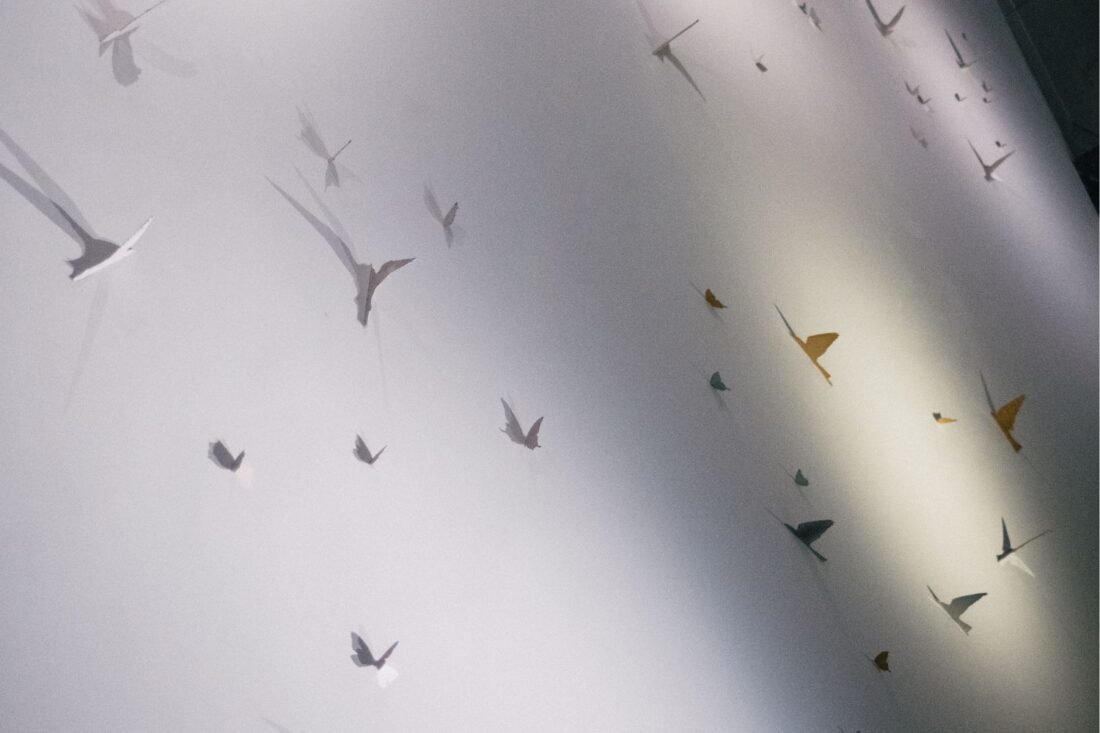
Barnaby Hosking's Birds and Butterflies, 200 birds and 100 butterflies in gold- and chrome-plated brass.
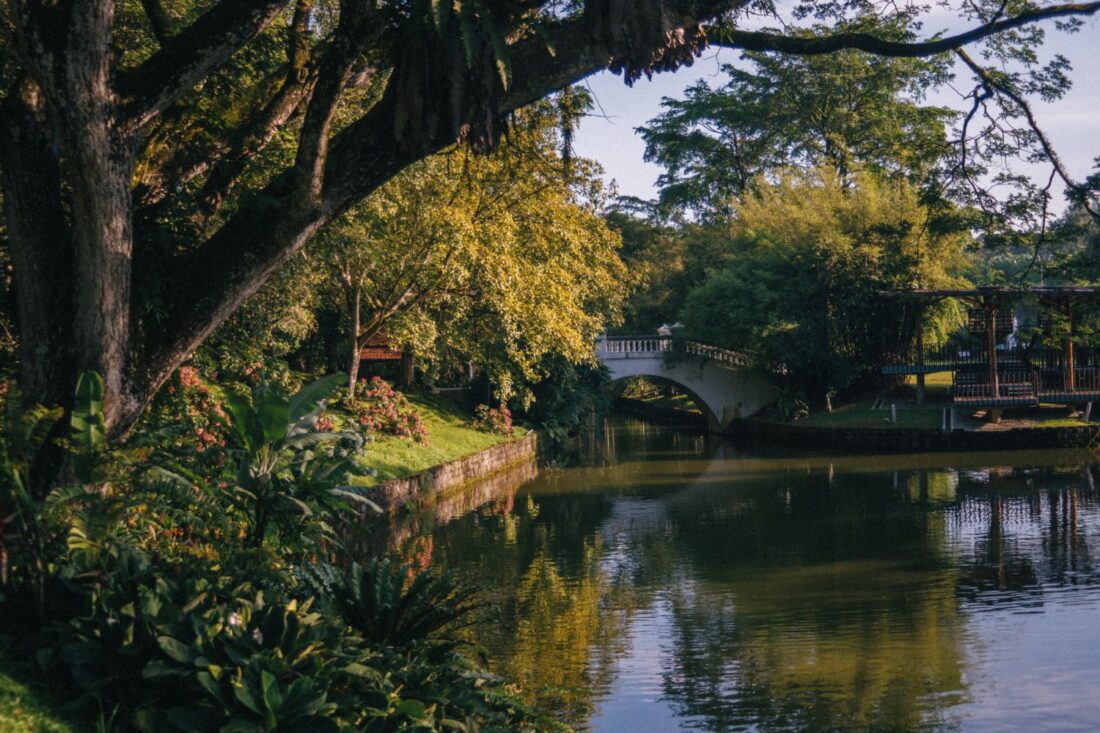
The floor-to-ceiling windows of the Presidential Suite frame the Perdana Botanical Garden.
The composition extends with the horse. On the escalator wall that climbs three floors to the ballroom, Barnaby Hosking’s Birds and Butterflies installation displays 200 birds and 100 butterflies, each precisely crafted from gold- and chrome-plated brass. Every figure has a single wing, with spotlights casting its other half into shadow, so each appears complete only in silhouette.
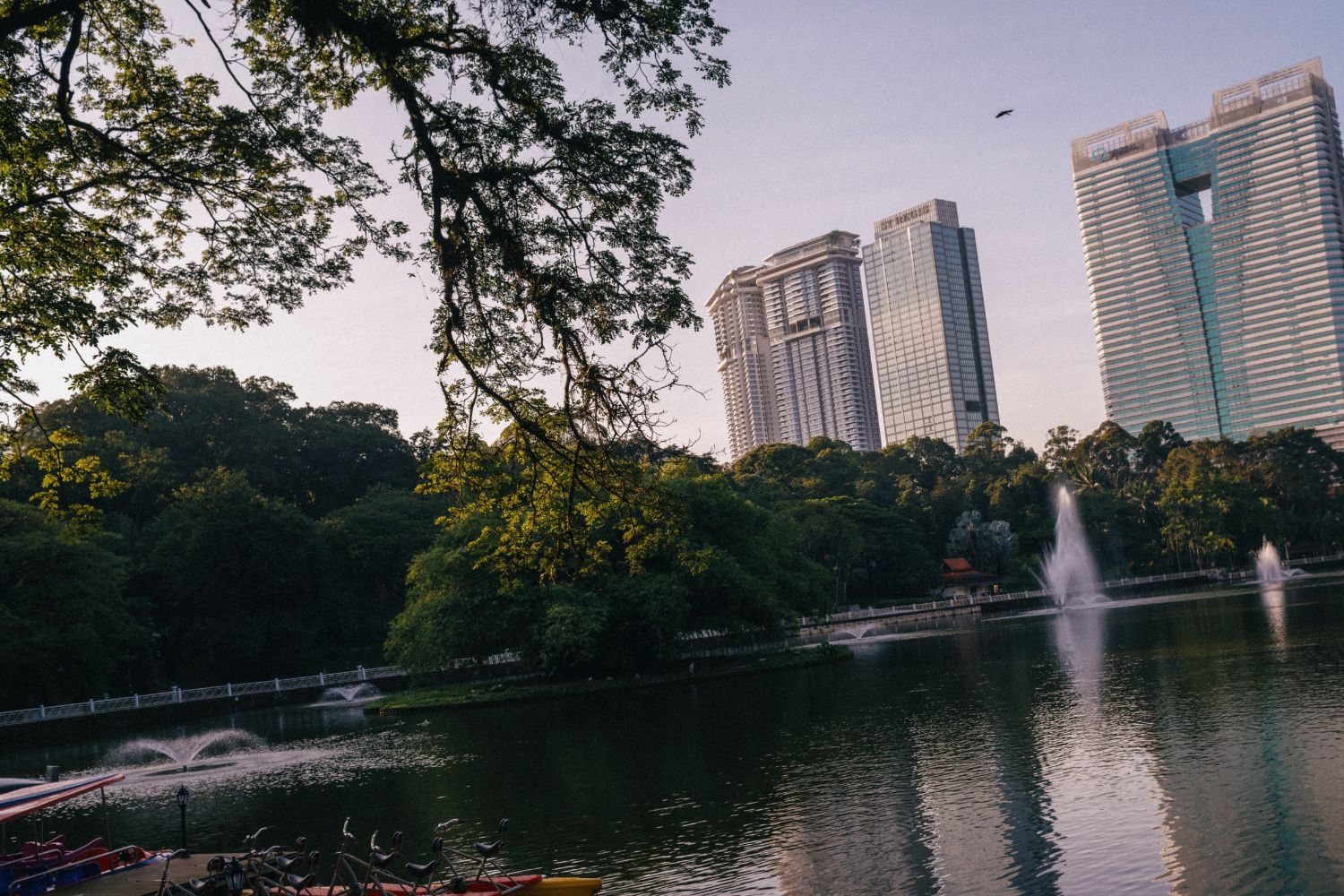
One final frame awaits upstairs – the Presidential Suite, where floor-to-ceiling windows present not the skyline found on postcards, but the city visible only from here. Overlooking the Perdana Botanical Garden, established in 1888, you realise this is the masterpiece the hotel has been framing since your arrival.
Taste
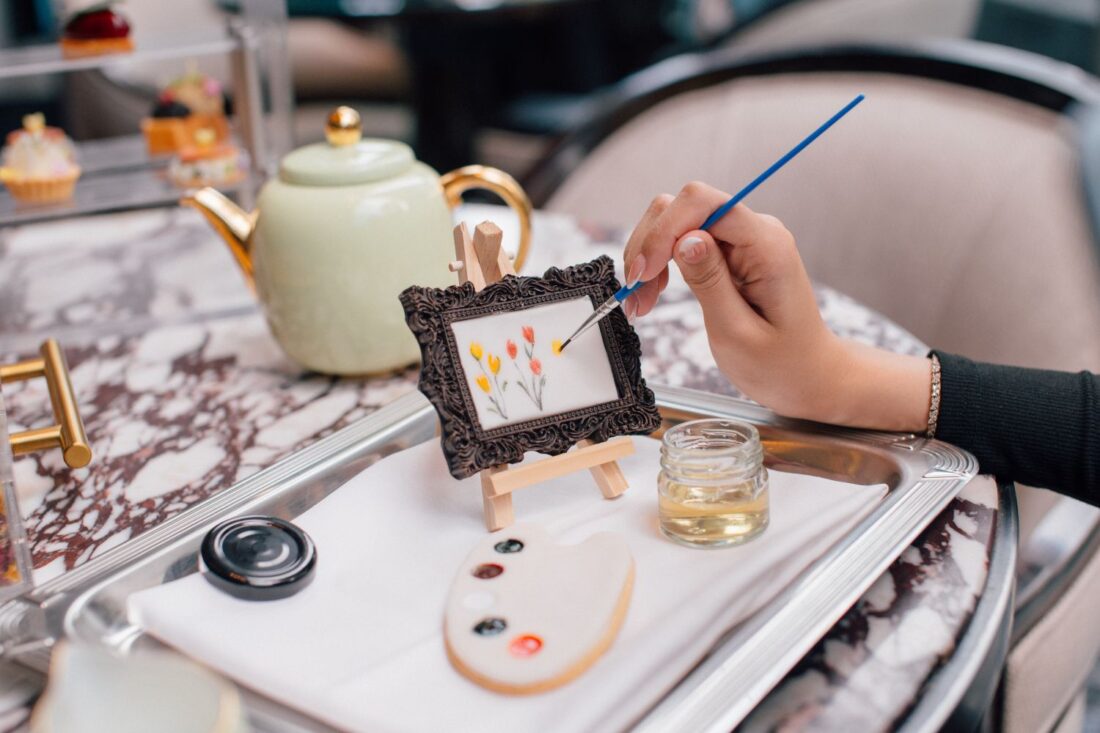
The afternoon tea ritual includes an edible canvas to paint.
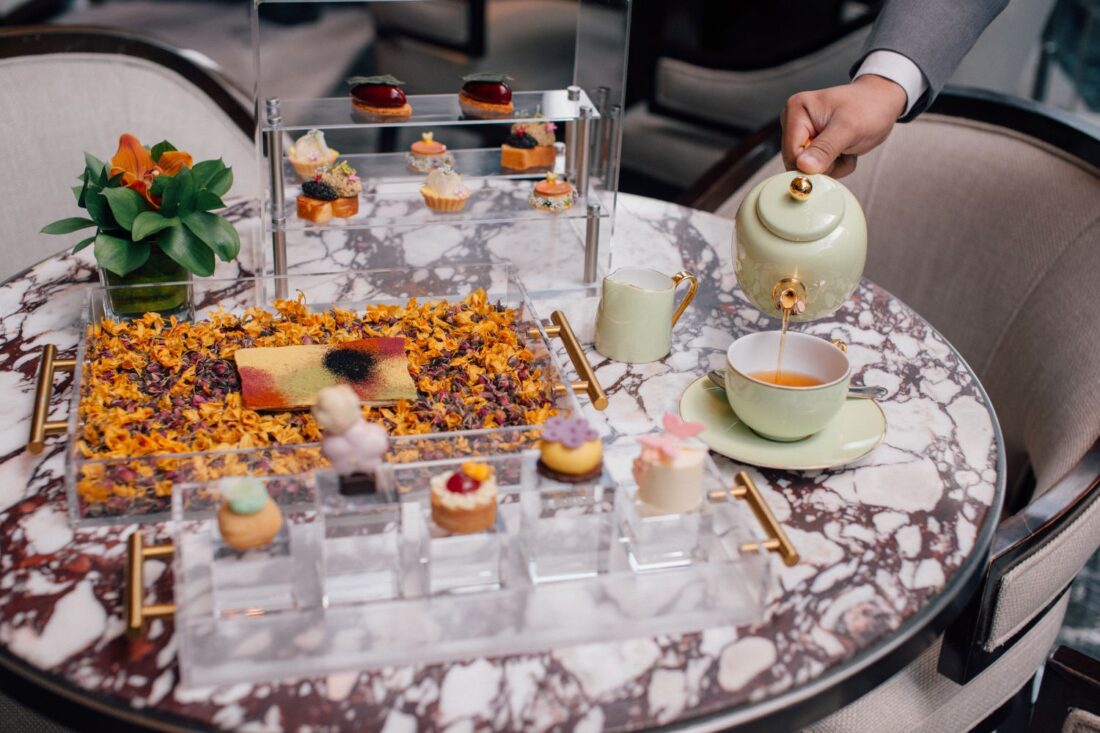
The sommelier pours the tea at the table, setting the afternoon ritual in motion.
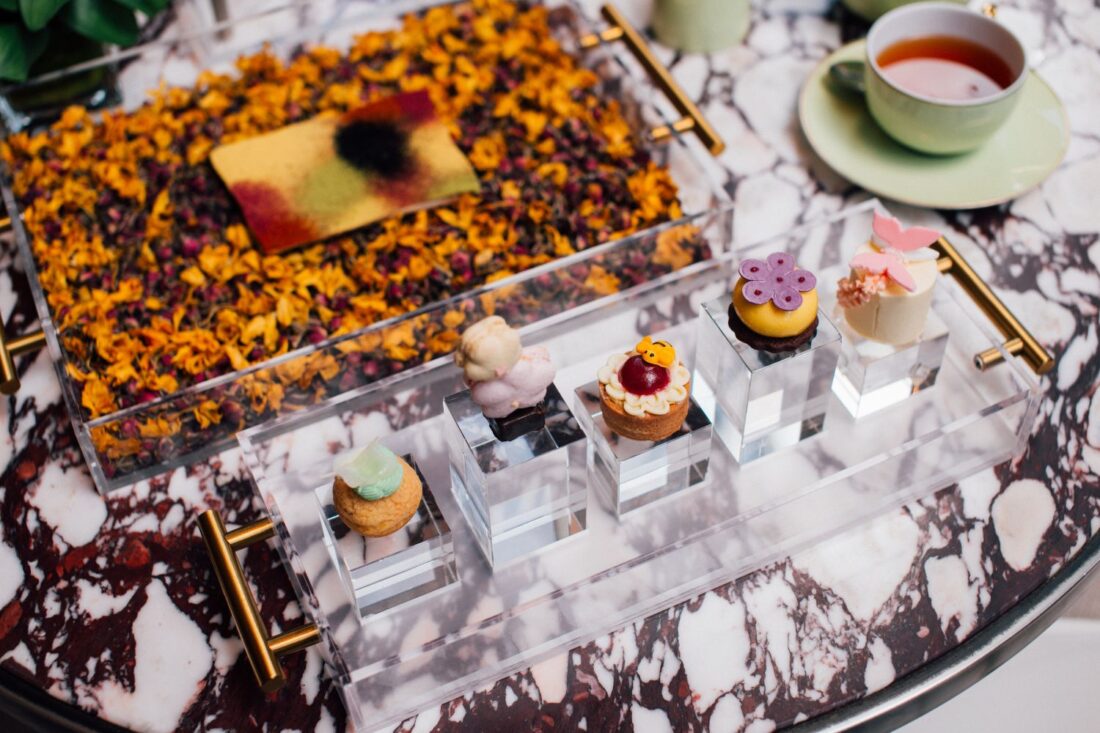
A row of botanical-inspired petits fours completes the afternoon tea.
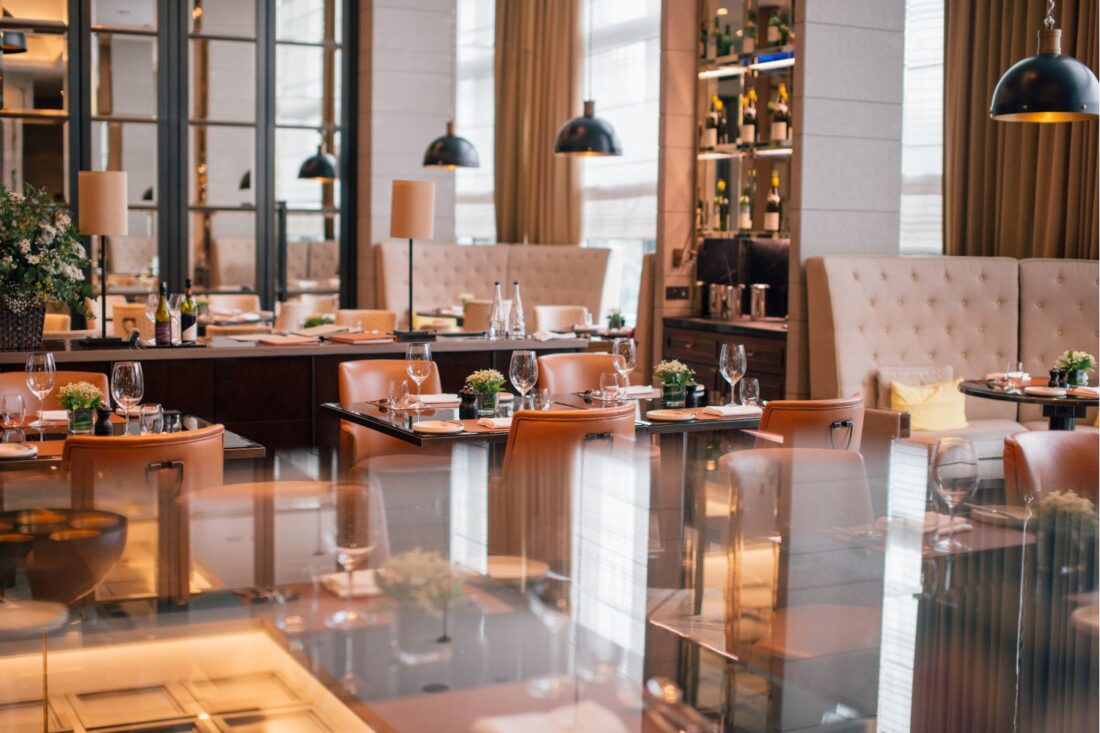
The Brasserie sits dressed, with every table set for the evening ahead.
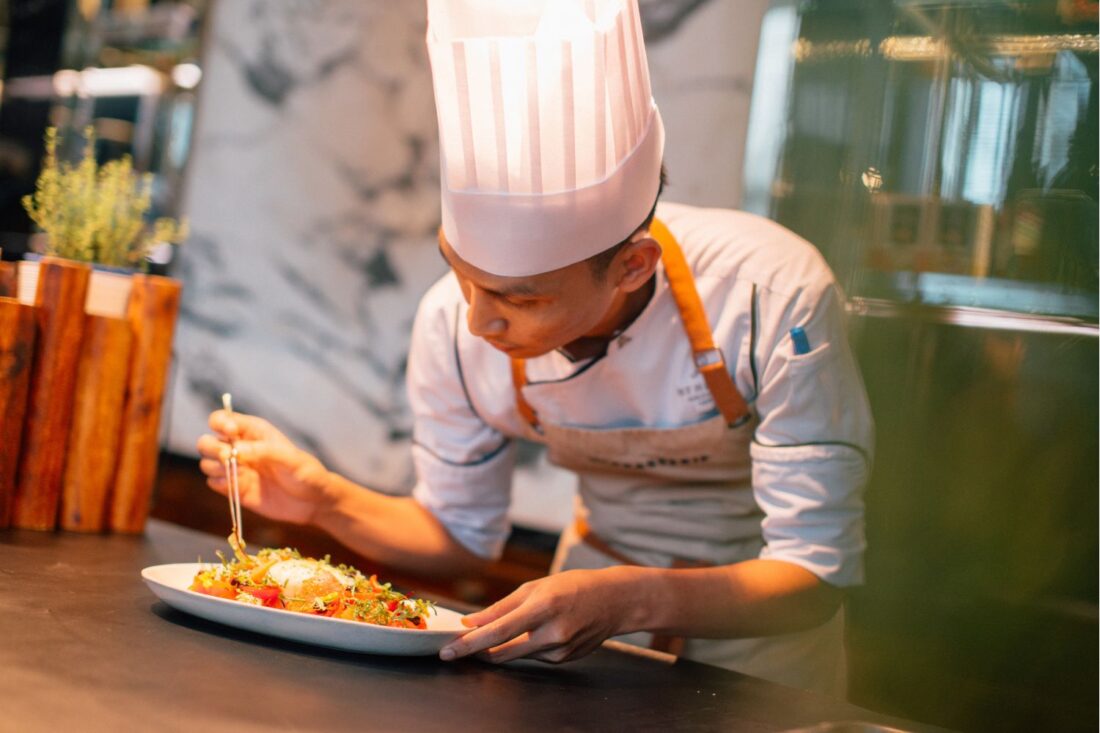
The chef places every element with intent before the plate reaches the table.
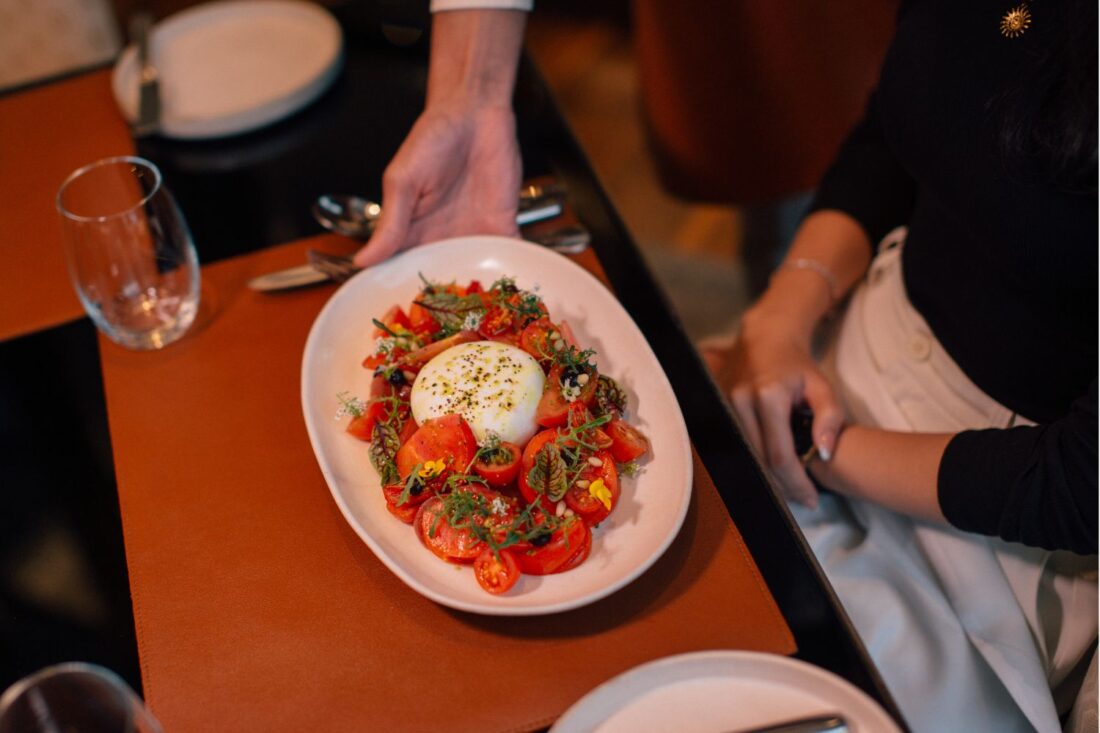
The signature Heirloom Tomatoes brings together sun-ripened fruit and creamy burrata.
You are not meant to flit in and out of the dining rooms here – you are intended to settle into them. The table is already dressed when you arrive – linen pressed flat, glassware angled to catch the light, silver arranged precisely in order of use.
Nowhere is this more literal than at three in the afternoon, when the Drawing Room is set for tea. The four-course ritual is arrayed on a three-tiered stand before the first guest arrives, and a sommelier – for tea, not wine – moves between tables to guide you through the selection. Originating from Caroline Astor’s private 19th-century New York gatherings, the custom continues today as a daily public gesture.
In The Brasserie kitchen on Level 2, Chef Marco Erba, Chef Sakhawi Bin Azizi, and the culinary team combine traditional Malaysian flavours with modern European touches. Menu highlights include the signature Heirloom Tomatoes – sun-ripened heirloom tomatoes paired with creamy burrata. Serving as an elegant expression of seasonality, purity, and effortless refinement, it remains a perennial favourite at The Brasserie. Each plate features elements thoughtfully chosen to complement each other.
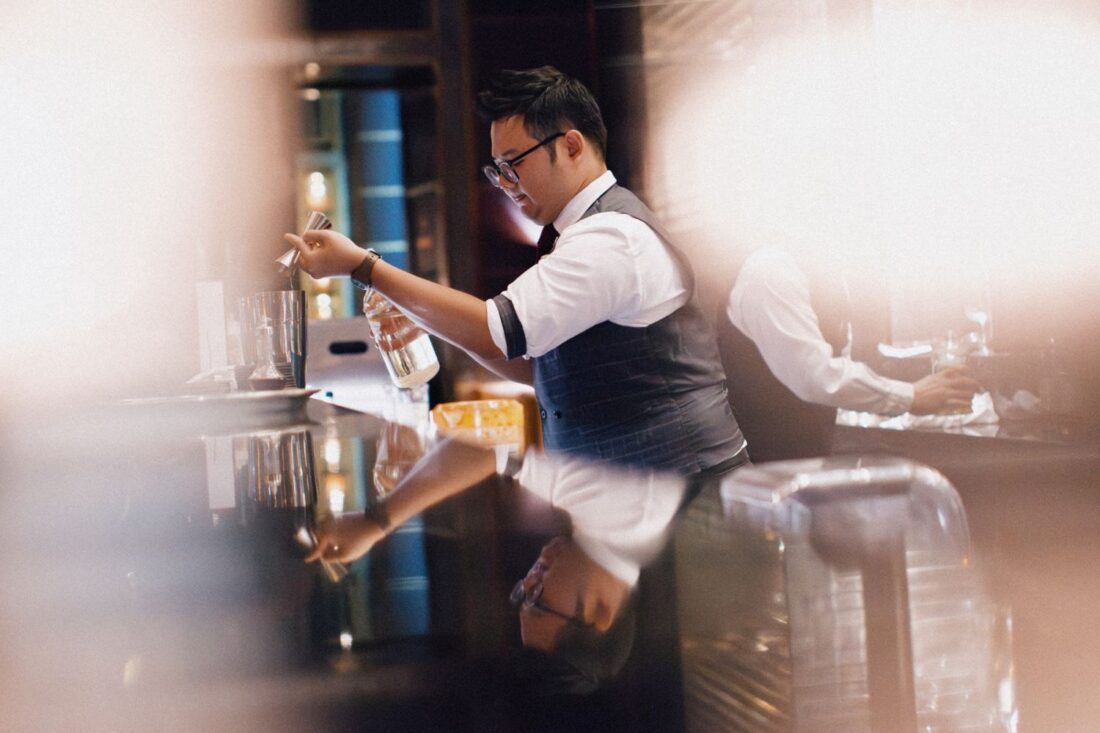
As evening arrives, the day's flow moves naturally to Astor Bar.
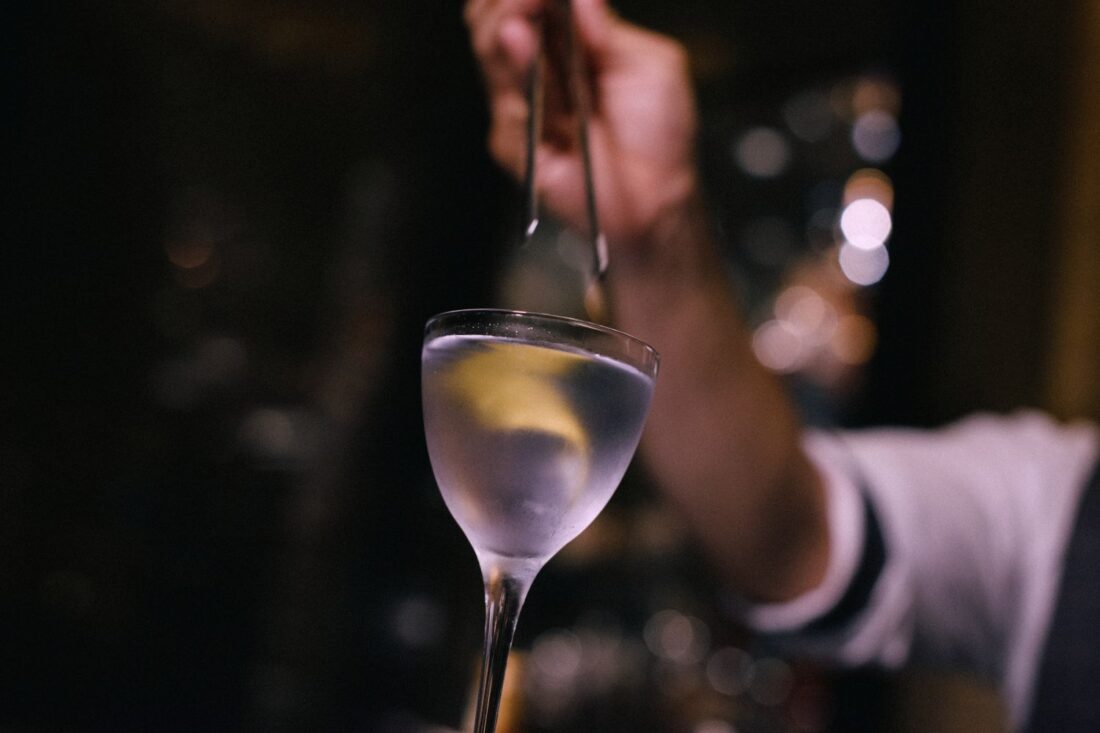
The Violet Hour Martini marks the moment day becomes night.
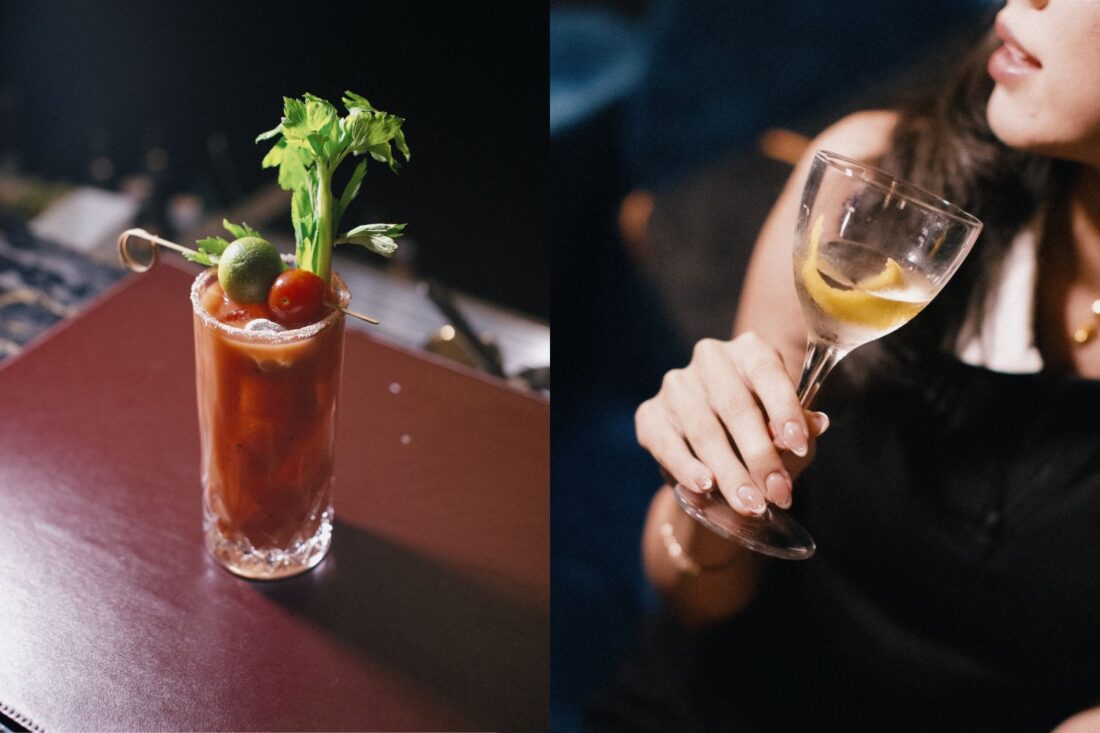
The Asam Boi Mary (left) and The Michelle (right) showcase the bar's two signature pours.
As the evening arrives, the flow of the day naturally moves to Astor Bar. Between seven and eight, every guest at the bar is poured a complimentary Violet Hour Martini, made with No. 3 London Dry Gin, stirred and served straight up in a chilled glass – continuing the brand’s house ritual for the moment when day becomes night.
While this ritual marks a transition, the bar’s signature cocktail offers another highlight, the Asam Boi Mary. The Bloody Mary was invented a century ago at St Regis New York’s King Cole Bar, and every St Regis has since written its own version. Here in KL, the Asam Boi Mary features vodka infused with asam boi (dried plum), calamansi lime juice, Sarawak black pepper, chilli padi, and a dried plum on the rim.
Then there is The Michelle, a cocktail created to honour Tan Sri Michelle Yeoh‘s historic Academy Award win. Created hand-in-hand with Yeoh, who personally tasted and selected each ingredient, this cocktail brings together juniper gin, vodka, Cinzano Bianco, and a measured dash of Angostura bitters, finished with a bright twist of lemon. The result is an inviting drink, clean, composed, and quietly assured, offering every guest the chance to share in a moment of quiet celebration.
Together, these experiences provide more than Malaysian fine dining or French-Mediterranean cuisine with Asian influences. They foster a sense of home by sharing recipes adapted to their new environment.
Scent

Scent is the invisible architecture of a space. You register it last, but it lingers in memory longer than the others – a principle this hotel composes down to the floral note.
You have crossed the lobby twice – on arrival and on the way to tea – but likely haven’t paused to notice the fragrance. The air carries Caroline’s Four Hundred, created in 2010 by perfumer Carlos Huber, inspired by a single ball Caroline Astor hosted at her Fifth Avenue residence in January 1900.
Layers of American Beauty roses, hyacinth, and white lilies rest on the green of cut stems and the cedar and oak of a ballroom. Every St Regis lobby in the world wears the same fragrance – so the air you breathe is a reconstruction of one Manhattan evening more than a century ago.
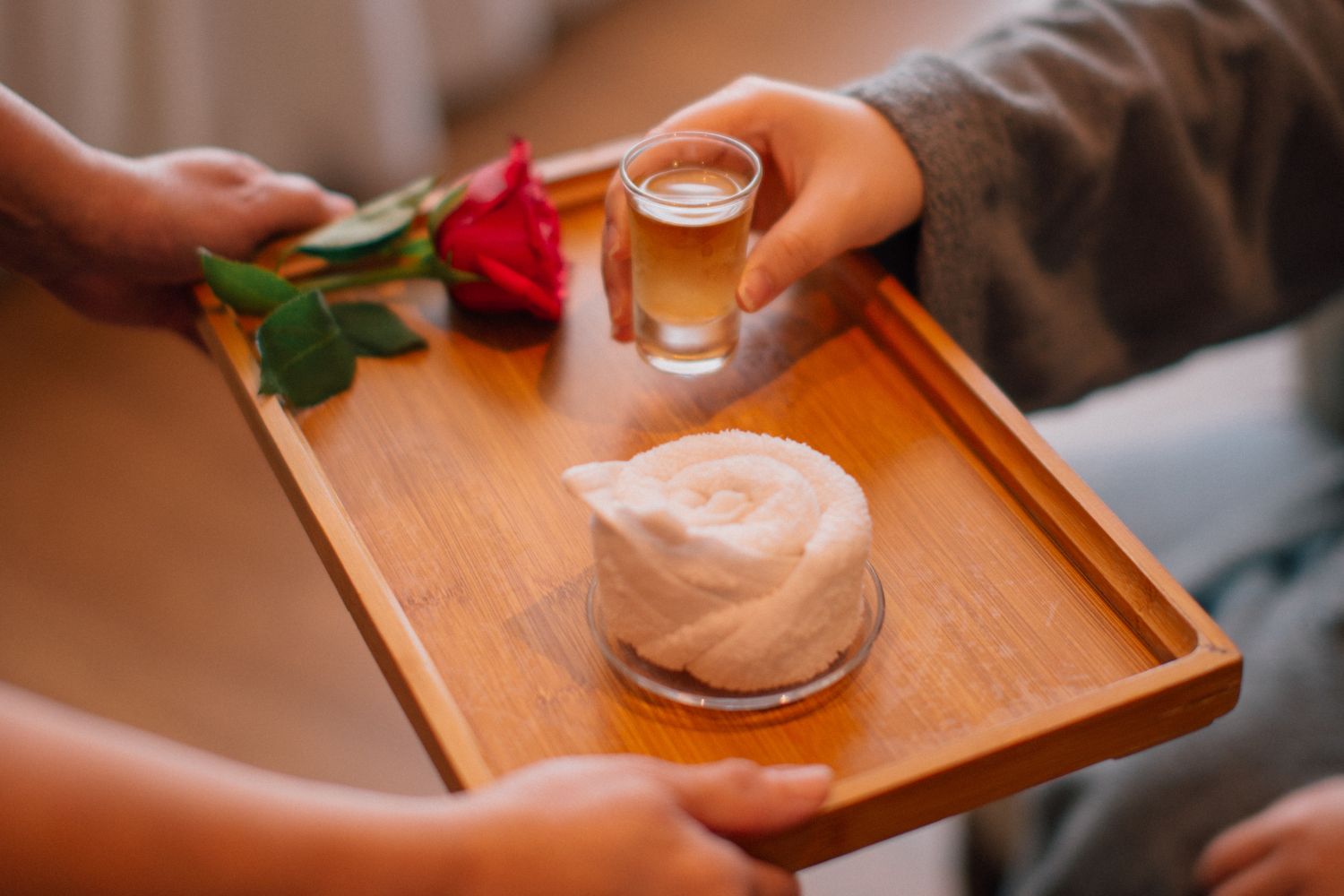
Take the lift to the sixth floor, where the lobby’s perfume fades and is gradually replaced by scents of eucalyptus, lavender, citrus, and warm woods. As you step deeper into the spa, you are greeted next with a foot ritual and ginger tea before the massage, a physical cue that the outside world has been left behind.
Inside the treatment room, a diffuser further intensifies these new aromas, enveloping the space. By the time the therapist’s hands rest on your shoulders, you have already been immersed in the treatment atmosphere for ten minutes.
Pay attention, and the intention behind each scent transition shows itself. The entire experience is composed, and you recognise it only when you step outside, when the city breaks the spell.
Sound
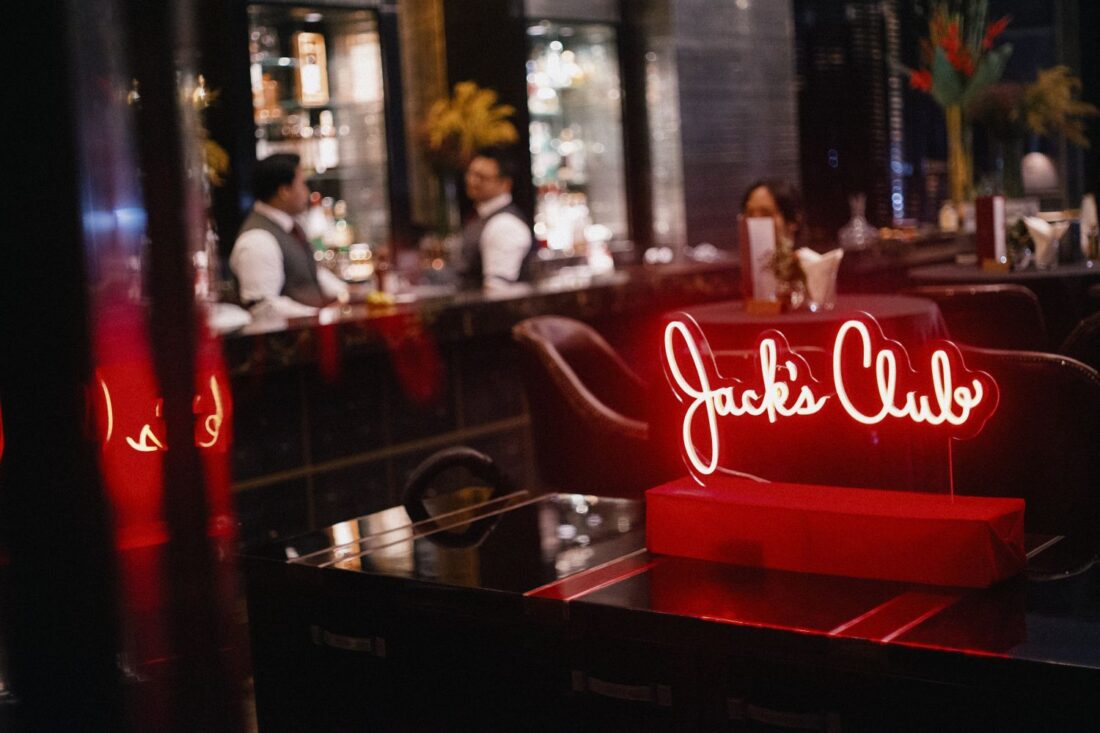
For one night a month, Astor Bar transforms into Jack's Club, the building's exclusive jazz venue.
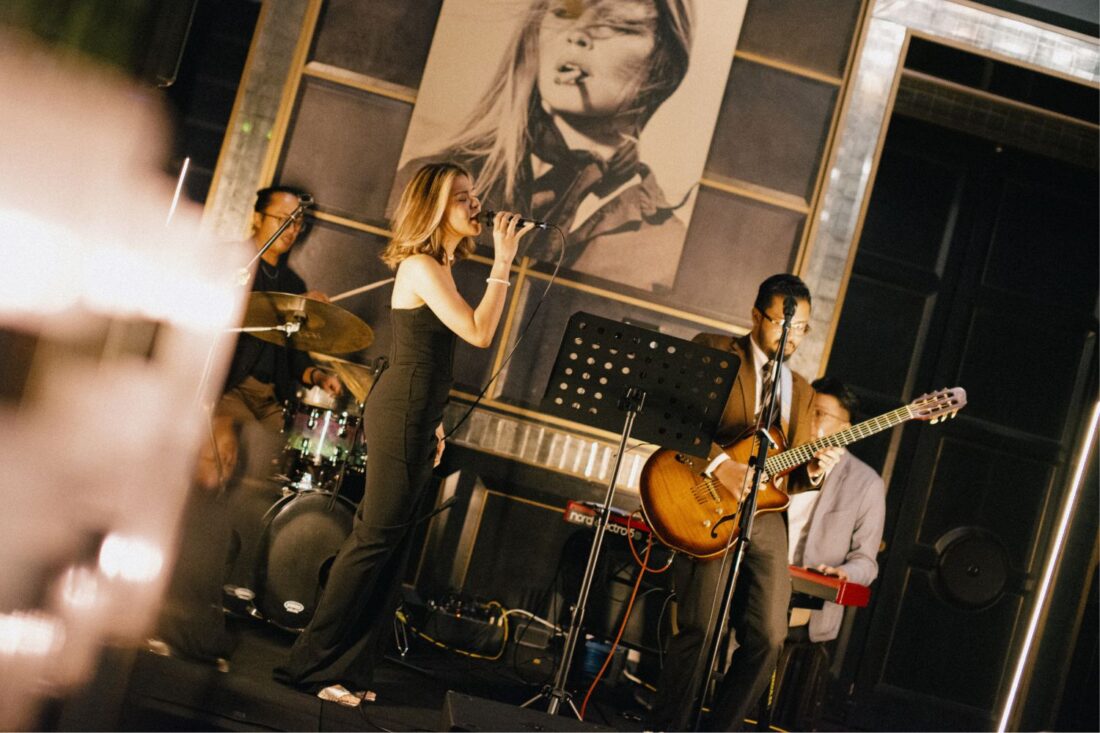
Local jazz artists transport the room back to a swinging 1960s lounge.
In the middle of one of Southeast Asia’s busiest transport hubs, the lobby is designed to let through only what it wants you to hear. Trains arrive beneath the building every few minutes yet you will not hear one. What reaches you instead is a short, edited list – heels on marble at a measured pace, a welcome offered three metres away to the person it is for, crystal meeting porcelain in The Drawing Room as tea is poured. Even the chandelier above is not technically a sound, but it is not silent either.
On the last Thursday of every month, one room in the building turns loud. At Astor Bar, Jack’s Club – named for John ‘Jack’ Jacob Astor IV – hosts the building’s only jazz night. The music is an Astor family inheritance, transplanted to the Malaysian capital. Local jazz artists fill the air as you sip on signature cocktails inspired by New York’s iconic neighbourhoods. For a few hours, the room feels like a swinging 1960s lounge while the rest of the hotel stays quiet.
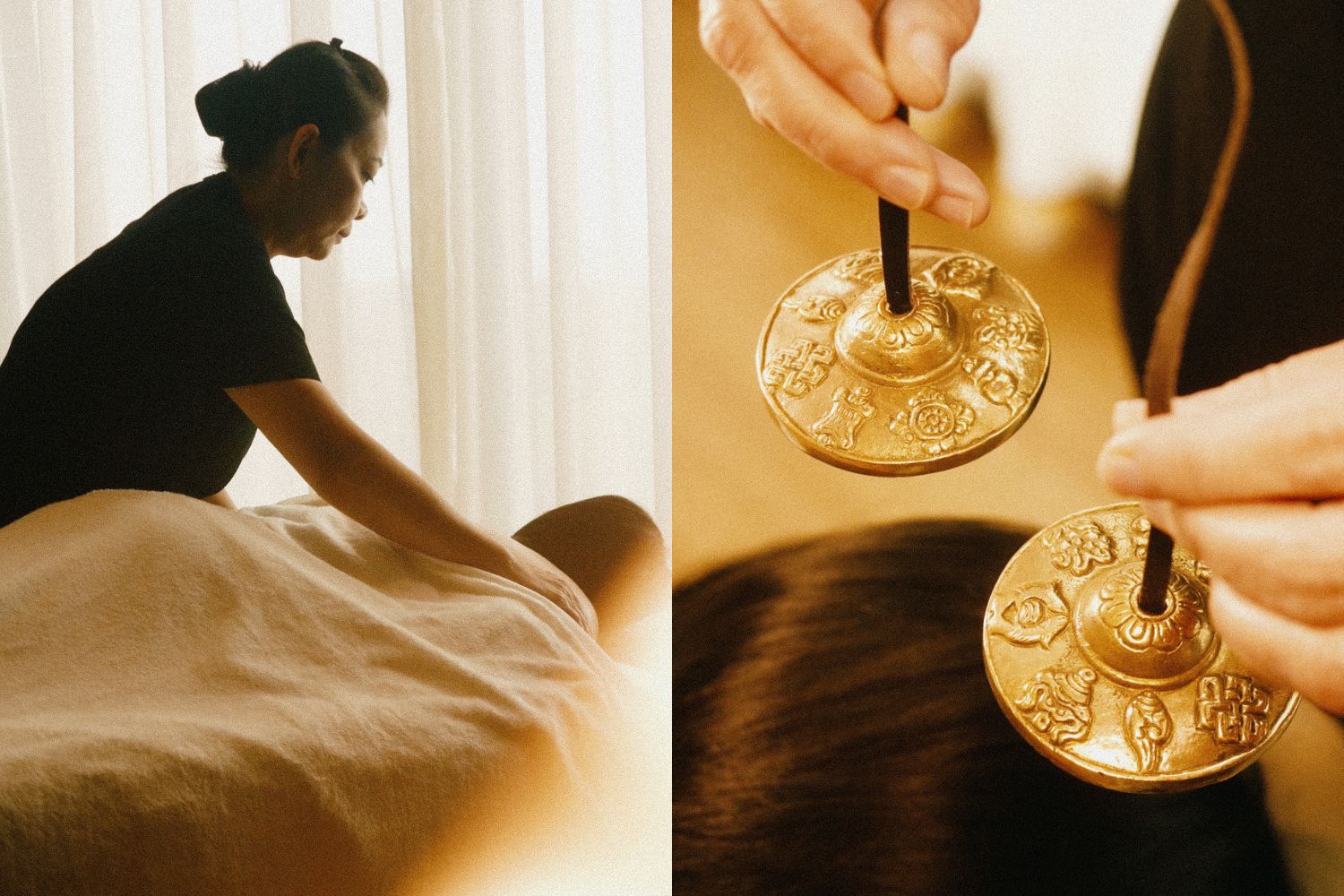
Simultaneously, the Iridium Spa takes an intentionally opposing experience. In the treatment room, music is tuned so low that the tingsha bells – two small cymbals marking the session – are the largest sound. The therapist, moving quietly, smooths warm oil into your skin. The bells, when they chime again, will signal the end of the session.
Once you step back to the porte-cochère, the filter lifts, and KL Sentral resumes with its chorus of trains, taxis, and the airport coach.
Touch
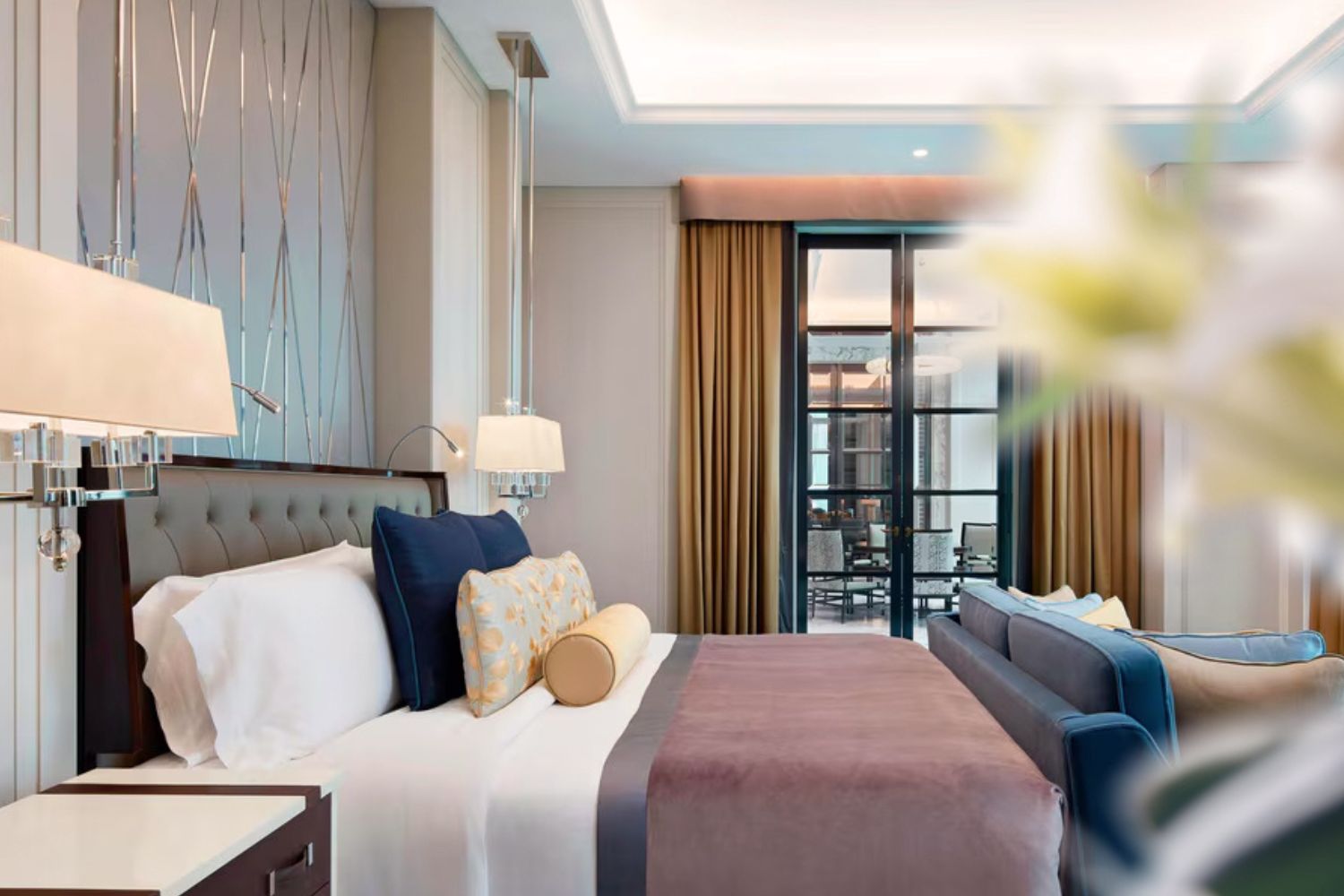
The hotel ends, like a household, with someone putting you to bed. By the time you return to the suite, the room has been remade. The day’s clothes are gone from the chair where you left them. The curtains have been drawn against the city. The bedside lamp is on at its lower setting. Somewhere between dinner and now, the butler – the same one who walked you up on arrival – has been in to turn the bed down, and the room is dressed for sleep.
As you enter, the first thing your hand finds is the linen. It is high-thread-count cotton, ironed flat enough that it holds its line when you sit on it. Next, you notice the bed itself – a pillow-top mattress, heavier than it looks, of the kind that arranges itself around you rather than waiting for you to arrange around it.
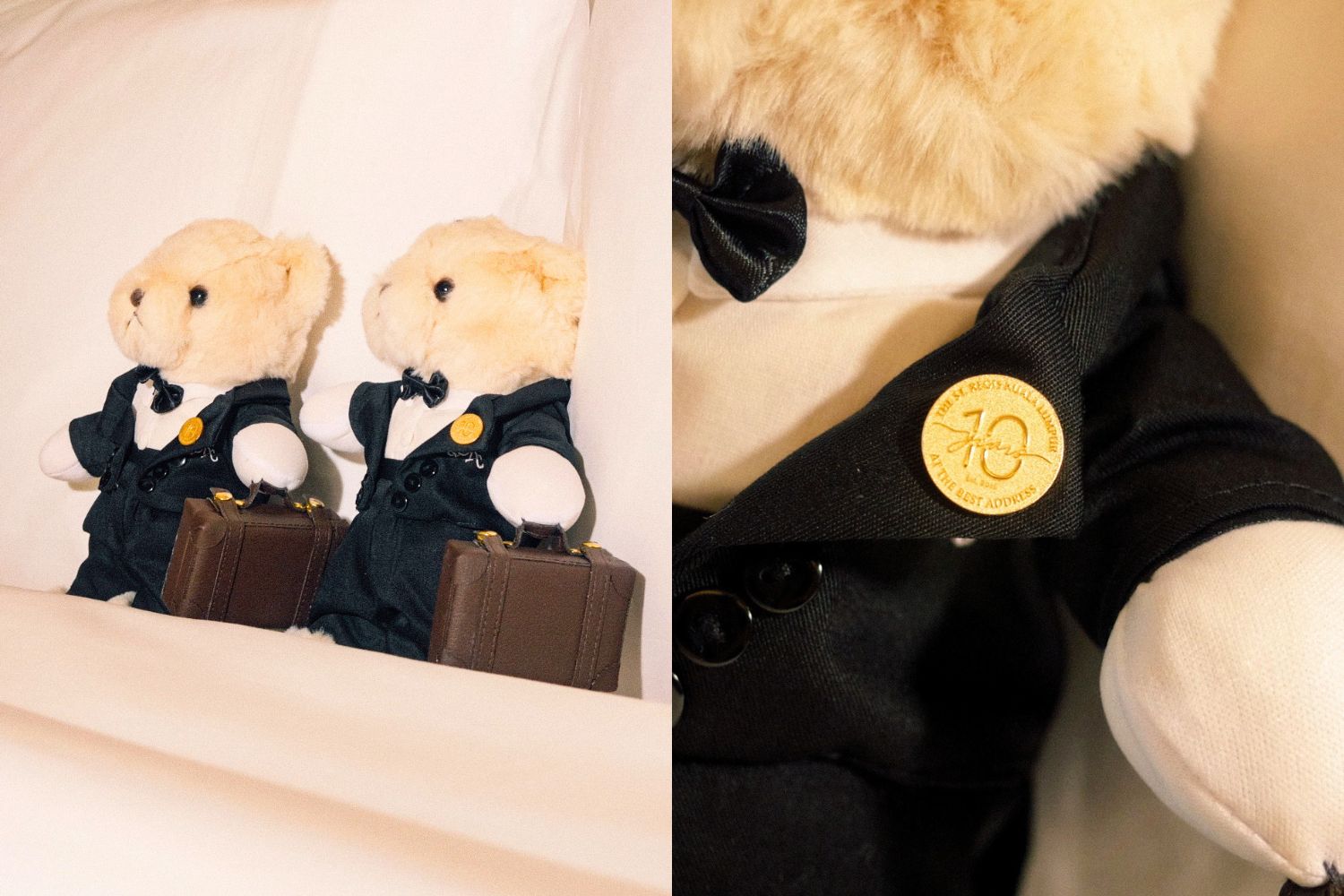
Finally, on the pillow beside yours, is the Butler Bear, a small teddy in a black butler’s coat, placed there in your absence with the St Regis monogram folded beneath. It is the house’s way of saying that the household has finished its work for the night and left you in the care of someone smaller.
A century and a quarter after these traditions were founded, the butler who turned down your bed operates in the exact same key. As with everything in your evening, you did not have to ask for any of this.
Now, by the time you lie down, the day the hotel has been composing for you is over. Sight has dimmed to the night lamp left glowing. Taste has faded to the last of the wine. Scent has thinned to the perfume on the linen. Sound has dropped to the hum of the air-conditioning and your own breathing. What remains is touch – the only sense you take into sleep with you. The household, having received you, lets you go.
Then, in the morning, when you wake, the building will start again from the beginning.
The final note
Most taglines are written for the wall, but the good ones are written for the room. You realise you have been inside the brand’s tagline – Live Exquisite – since the moment the doors closed behind you.
In the end, to stay at The St Regis Kuala Lumpur is to spend a few hours, or a few days, inside a building that has been written sense by sense. It is a language you are invited to read at whatever pace suits you, where the performance is entirely the hotel’s and waits only for you to begin.
The St. Regis Kuala Lumpur
Address: 6, Jalan Stesen Sentral 2, Kuala Lumpur Sentral, 50470 Kuala Lumpur, Wilayah Persekutuan Kuala Lumpur
Contact: +603-2727 1111
Website | Facebook | Instagram
Find more travel stories here.
Photography: Imran Sulaiman