








Milan Fashion Week Fall/Winter 2026 unveiled a domino of iconic fashion moments. Whether you were drawn to Diesel’s cacophonic spectacle or preferred the clean, timeless precision at Onitsuka Tiger, this season has undeniably raised the bar in fashion. Collections shifted beyond aesthetics and leaned into storytelling and intention.
Layering reached new heights at Prada, with each model – including Bella Hadid – walking the runway four times, each appearance reconfigured to challenge perception and form. Gucci, on the other hand, delivered high-glamour drama steeped in character, as Emily Ratajkowski embodied a performative “pretend-you-are-sober” strut that blurred the line between runway and theatre.
We list down five standout shows to unpack from the week that was.
Diesel
What’s campy, chaotic, yet undeniably on brand? For the F/W 2026 show, Diesel returned to its roots with Memorabilia as a historical revisit. More than 500,000 items piled up in a messy labyrinth in Via Moncucco 35, including props from past projects such as the inflatables from the F/W 2022 runway show. Also spotted were a flamingo, a five-tiered cake, and a giant polar bear, which all partly showed off the four-decade evolution of Diesel, and partly felt like the aftermath of the party of the century.
The models showed up mirroring the set – covered in metallic body glitter, decked in riotous colours and pieces that screamed of fabric manipulation. It started with staple pieces like skinny jeans and tousled denim jackets, but print-on-print puffed jackets and skirts, flowy wool blazers with suede lapels, and scrunched tampering across sweatshirts slowly began to unfold. Layering is intentionally chaotic, with silver, green, mustard brown, and blue pieces combined at once.
Onitsuka Tiger
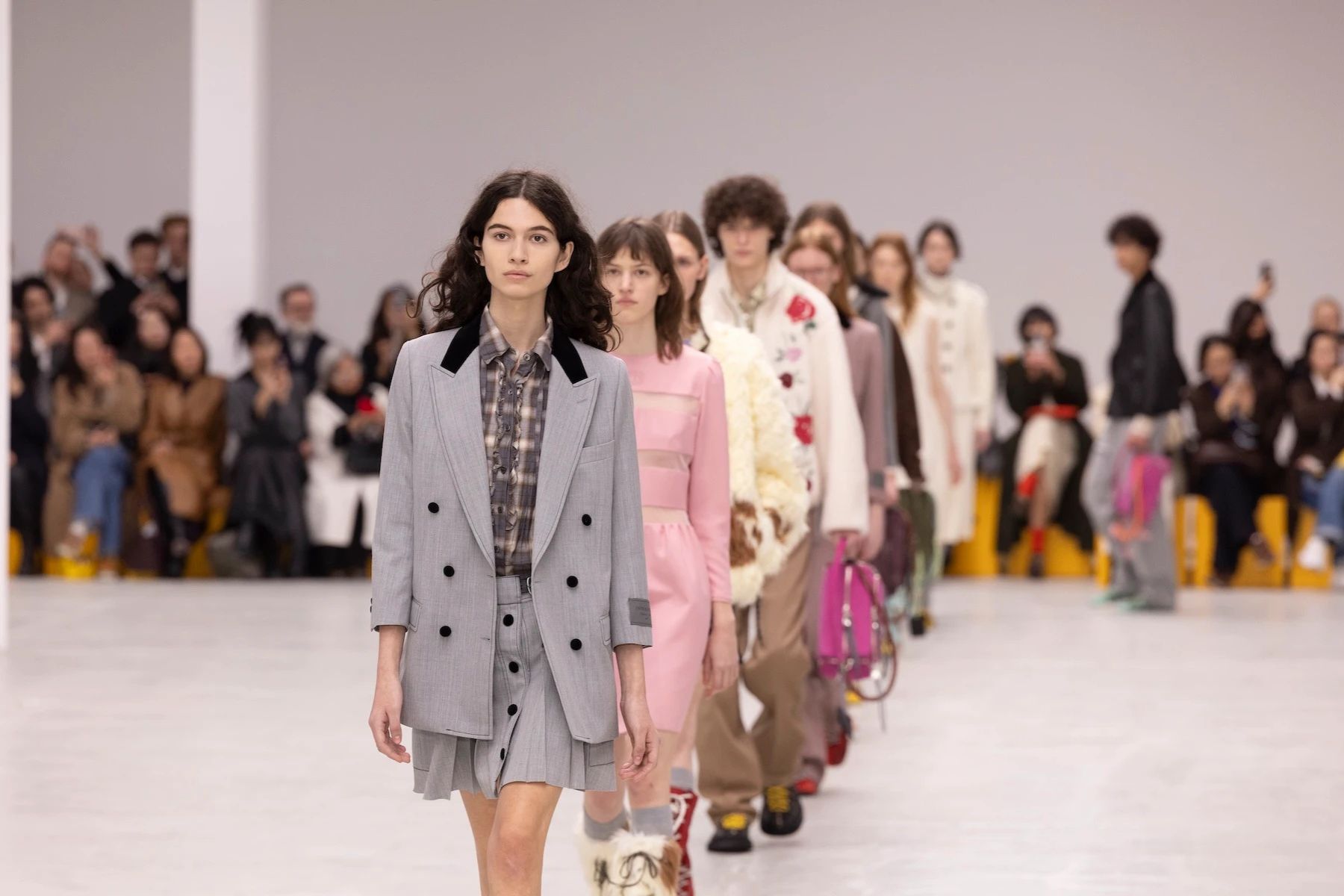
The theme for Onitsuka Tiger’s Fall/Winter 2026 collection by Andrea Pompilio is The Aesthetics of Ma. Showcased at Vigevano 18 in Via Vigevano, “Ma” is a Japanese cultural concept that describes a meaningful space between two elements, whether in space or in time. “It embodies a fashion aesthetic that aligns neither with exception nor with habit but exists between the two – shaped by the character and attitude of those who choose and wear the clothes, rather than by occasions,” the maison explained.
The collection seamlessly connects workwear, sportswear, casualwear, and formalwear, all of which are demonstrated through meticulous tailoring. Each piece complemented the wearer without overpowering. Floral motifs were embroidered on cardigans and wool jackets, while pastel hues – such as candy pink and apple green – were in full swing from head to toe in tasselled skirts and dresses with long, flowy bows. Zooming in on the shoes, we saw sneakers and kitten heels donning Onitsuka Tiger’s signature strap design, while the goat-hair boots, mid-calf sneakers, and floral-print footwear finish off the looks with lively elements.
Prada
Layering reached new heights inside the Deposito of the Fondazione Prada, but if you thought you were seeing double (or should we say quadruple?), you were not mistaken. With only 15 models appearing throughout the show, each model, including Bella Hadid, returned to walk the runway four times. However, pieces were gradually removed with every appearance, showing how an outfit can be transformed multiple times. The collection was “an embrace of inherent pluralities, a reflection of the multifaceted realities of women and the complexities of life,” Miuccia Prada and Raf Simons said in the show notes. Giving more in fashion now is no longer limited to more designs – it also means more intention.
The layering also highlighted the metaphor of women through all walks of life, from the memories to the experiences. It started with sleek wool coats and polished leather coats, but as the looks progressed, the clothes from underneath showed signs of being worn, such as the distressed wool or exposed linings. In this narrative, layering is more than just a styling trick. It showed how clothes from the runway can be worn and manifested in daily life.
Gucci
For a debut runway show, Demna delivered, arguably, the best show overall from Milan Fashion Week with his Gucci Primavera. It was full-on high-glamour drama steeped in character at Palazzo delle Scintille. Primadonnas, party girls, and laid-back personalities strutted down the runway, each unleashing their own unique personalities. Emily Ratajkowski beautifully executed a performative “pretend-you-are-sober” walk, while Gabbriette kept tugging at her skirt, leaning into a deliberately dishevelled persona. “Gucci is a brand, but it is also a shared cultural touchpoint that speaks to a wide variety of people, reflected in the range of archetypes, tastes, identities, and dress codes of Primavera,” said the house.
The opening look was a white mid-thigh bodycon dress with pointed-toe heels, completed with smokey eyes and a striking glossy red lip. It was a strong first impression of the looks to come. Other than that, sharply tailored blazers and skin-tight T-shirts ruled the collection. The gleaming finish easily added a touch of glamour to everyday essentials. Further along the show, an exaggerated fur jacket paired with crocodile leather pants made an appearance, becoming the epitome of chic. Closing the show was the iconic supermodel Kate Moss wearing a backless bedazzled dress, showing off the emblematic Gucci G-string. Overall, Demna’s runway debut reminds the crowd of what Gucci has always been and how it will always be that brand.
Bottega Veneta
Bottega Venetta’s creative director, Louise Trotter, presented The Dialogue Between Brutalism and Sensuality at Palazzo San Fedele, the maison’s new Milan headquarters. The set-up was an intimate setting of softly lit red carpets, lacquered columns, and a seating installation titled ‘421 chairs’ in collaboration with British furniture designer Max Lamb. “This collection is dedicated to the expression of the collective: the wondrous collaboration between the heart, the mind, and the hand,” Bottega noted.
Bottega has always been strong on its subtle branding. Hence, the iconic Intrecciato leather weave remained central and applied without overpowering, be it on bags, lapels, and skirts. Each design curved around the body rather than restricting it. Silhouettes were sculptural yet enveloping, with rounded shoulders, flamboyant outerwear, and roomy trousers. The palette leaned towards mostly dark and restrained – with blacks, browns, and deep neutrals – but accented by occasional brighter tones like electric blue and candy pink, while allowing texture to take the lead.
Keep up with the latest fashion news here.