




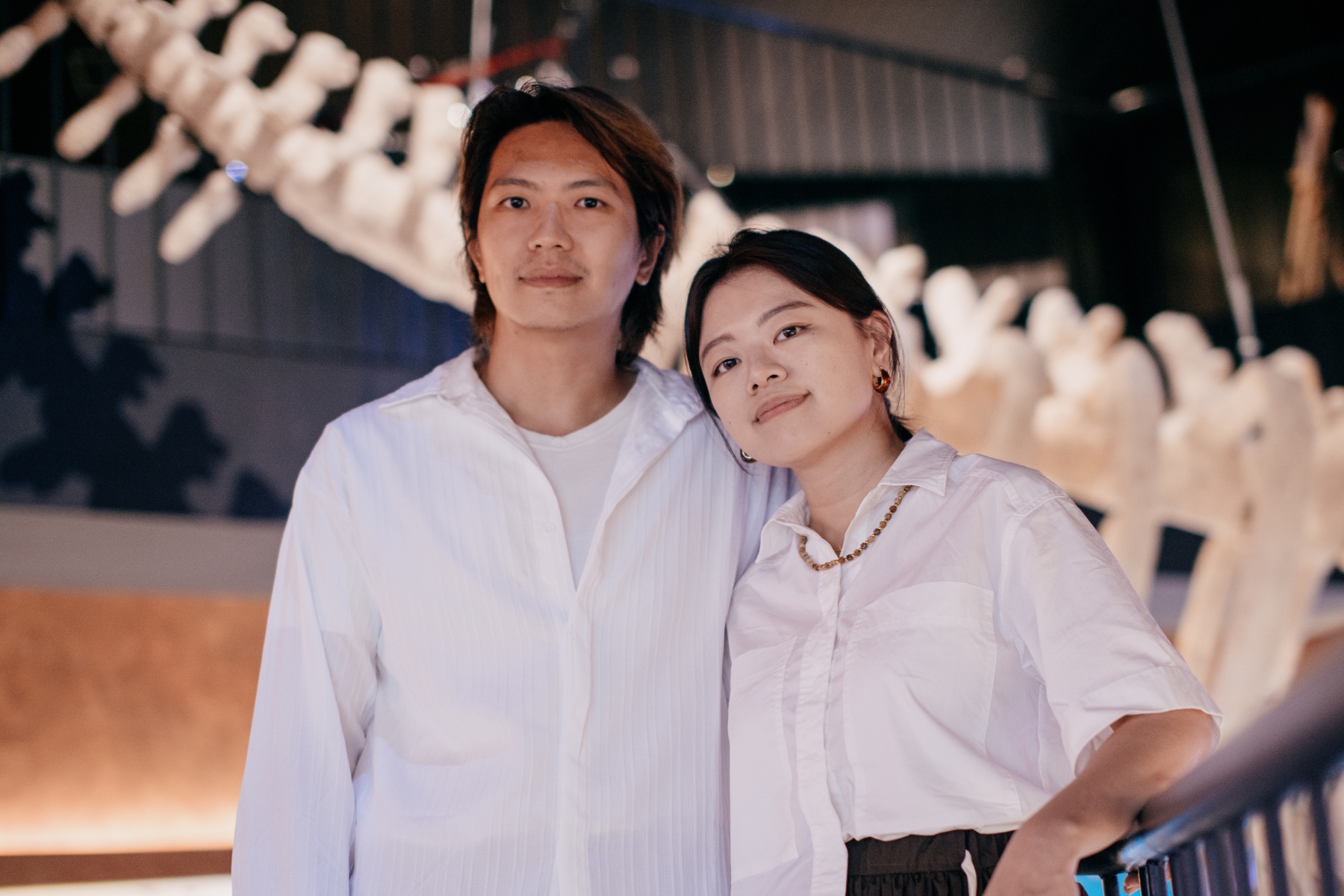





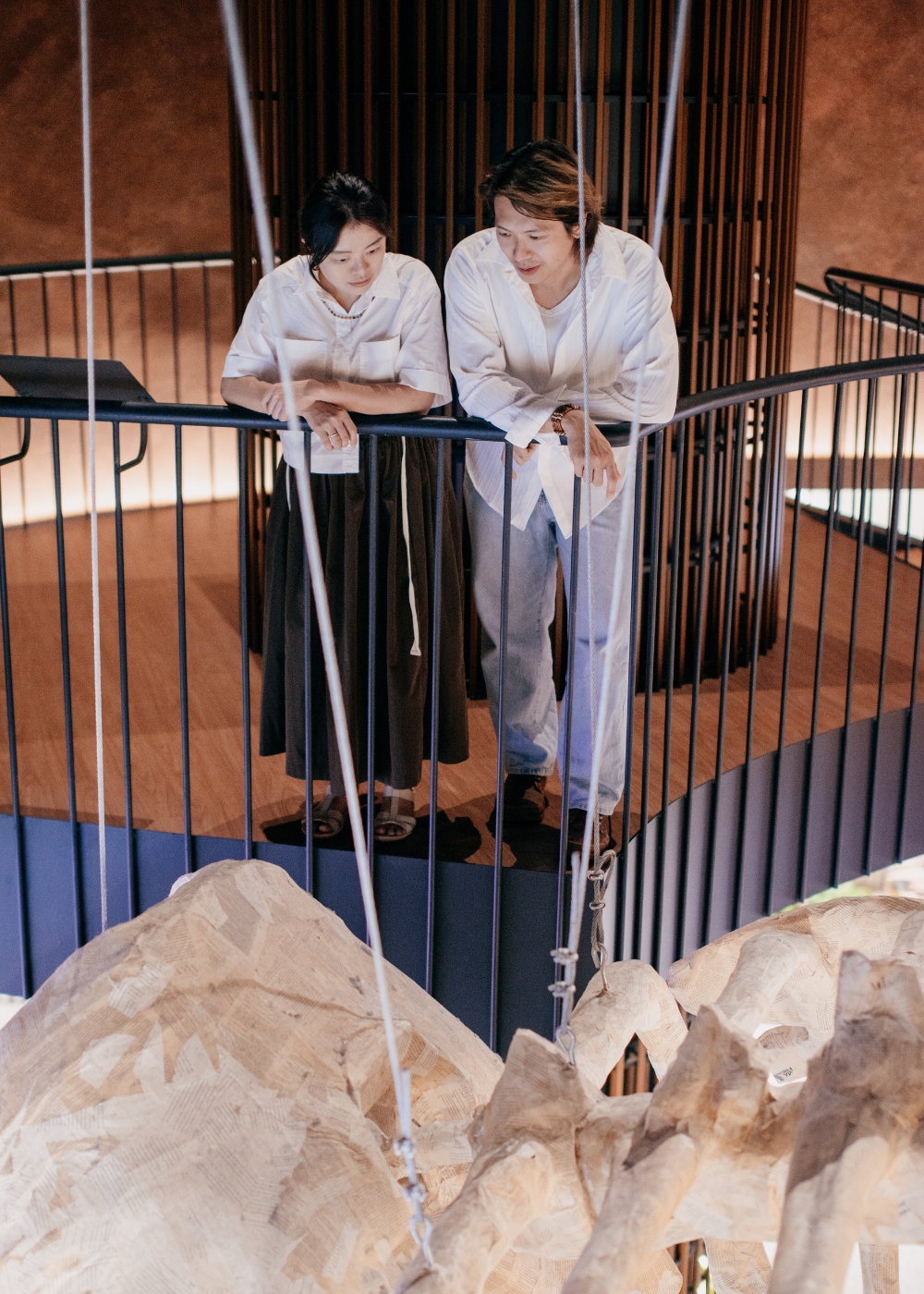
The entrance to The Library at Sunway Square is the kind of space that makes you pause in quiet awe. Floating mid-air is a striking skeletal form, visible from every angle as you ascend the curved staircase leading up into the space. Titled Whale Fall, the installation is the first permanent work by environmental artist duo Celine Tan and Oscar Lee of Co2_karbondioksida.
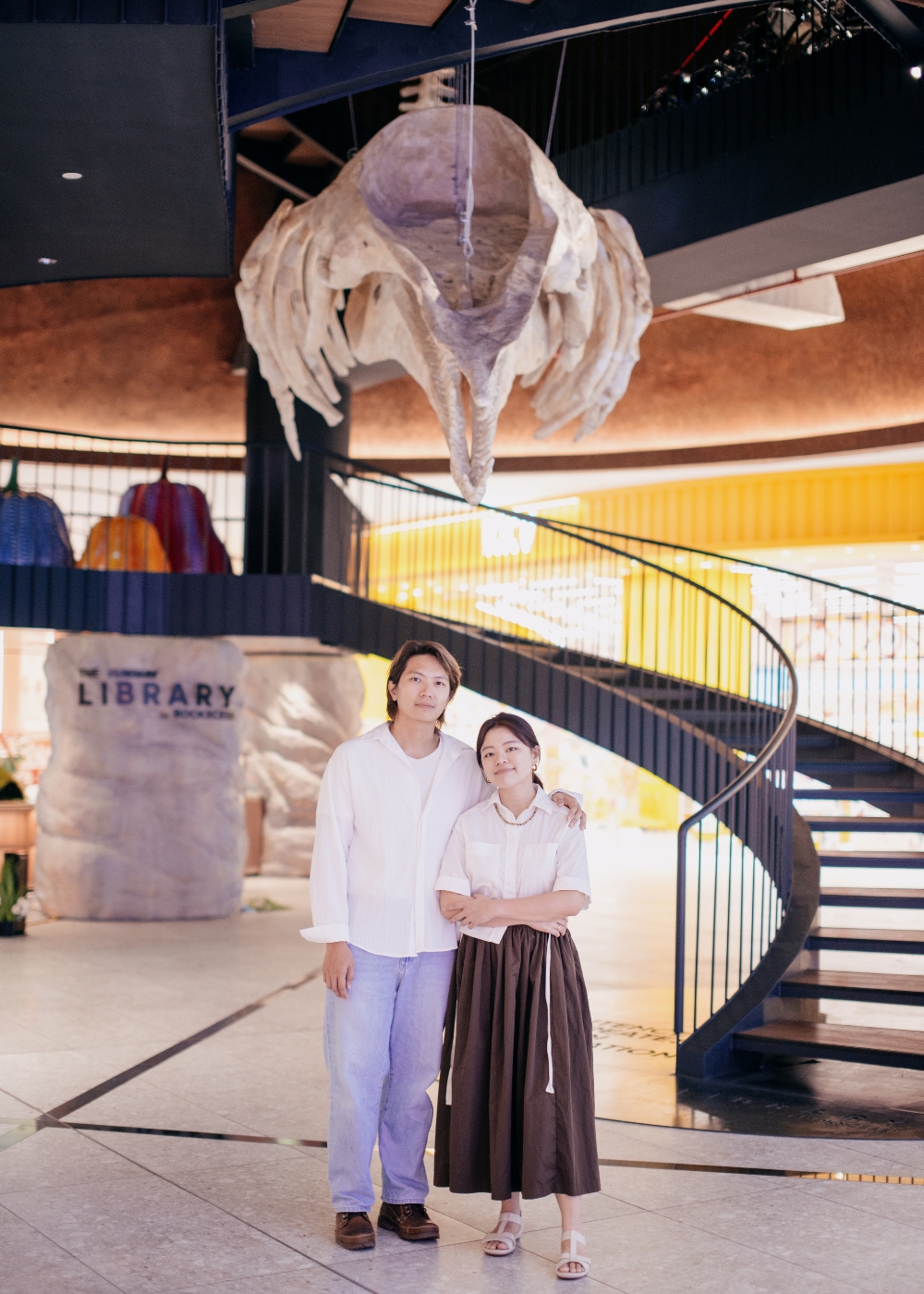
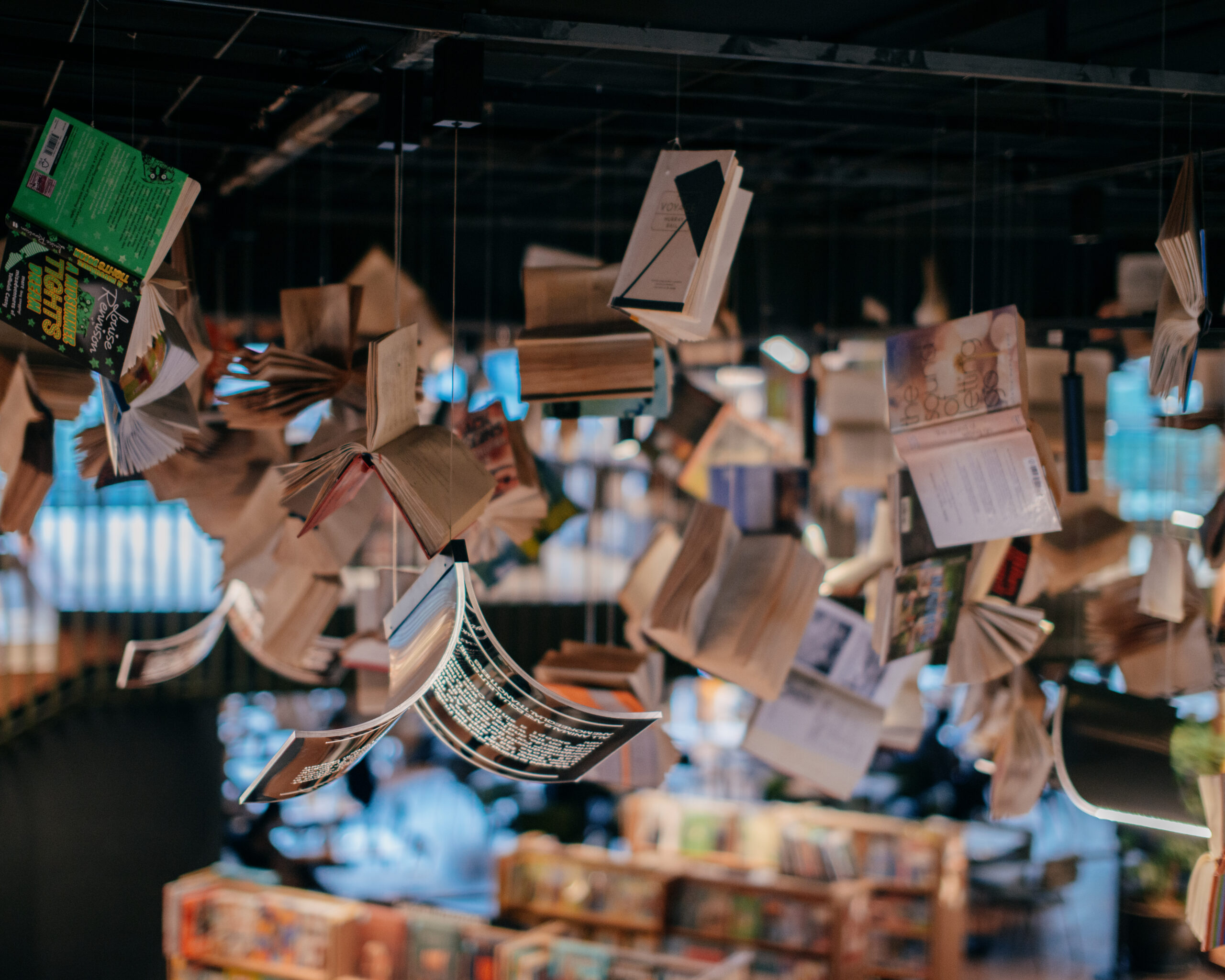
Step inside, and another scene unfolds: hundreds, if not thousands, of books appear to take flight, their pages spread open like wings caught in motion. Together, the installations create a striking contrast – one light and almost whimsical, the other grounded and contemplative. But both share a common thread: transformation. Discarded materials reimagined into something that invites pause.
It’s also here that we meet the minds behind the works. Oscar cradles their newborn son while Celine greets us warmly. They’ve just arrived from Muar, where their home and studio are based. Despite the scale of what they’ve created, their presence is disarmingly grounded – perhaps a reflection of the balance they’ve spent years learning to navigate.
Before art, there was adaptation
Long before they became environmental artists, Celine and Oscar were architecture students in Kuala Lumpur – classmates first, then partners in life and work. In practice, architecture came with layers of restrictions – bylaws, approvals, and systems that often meant little room for expression.
Many of their peers went on to become submitting architects, shaping buildings within strict frameworks. For Celine and Oscar, that limitation gradually pushed them to look elsewhere for a more direct way to communicate. Yet the seeds of what they do today were planted much earlier, in childhoods shaped by resourcefulness and imagination.
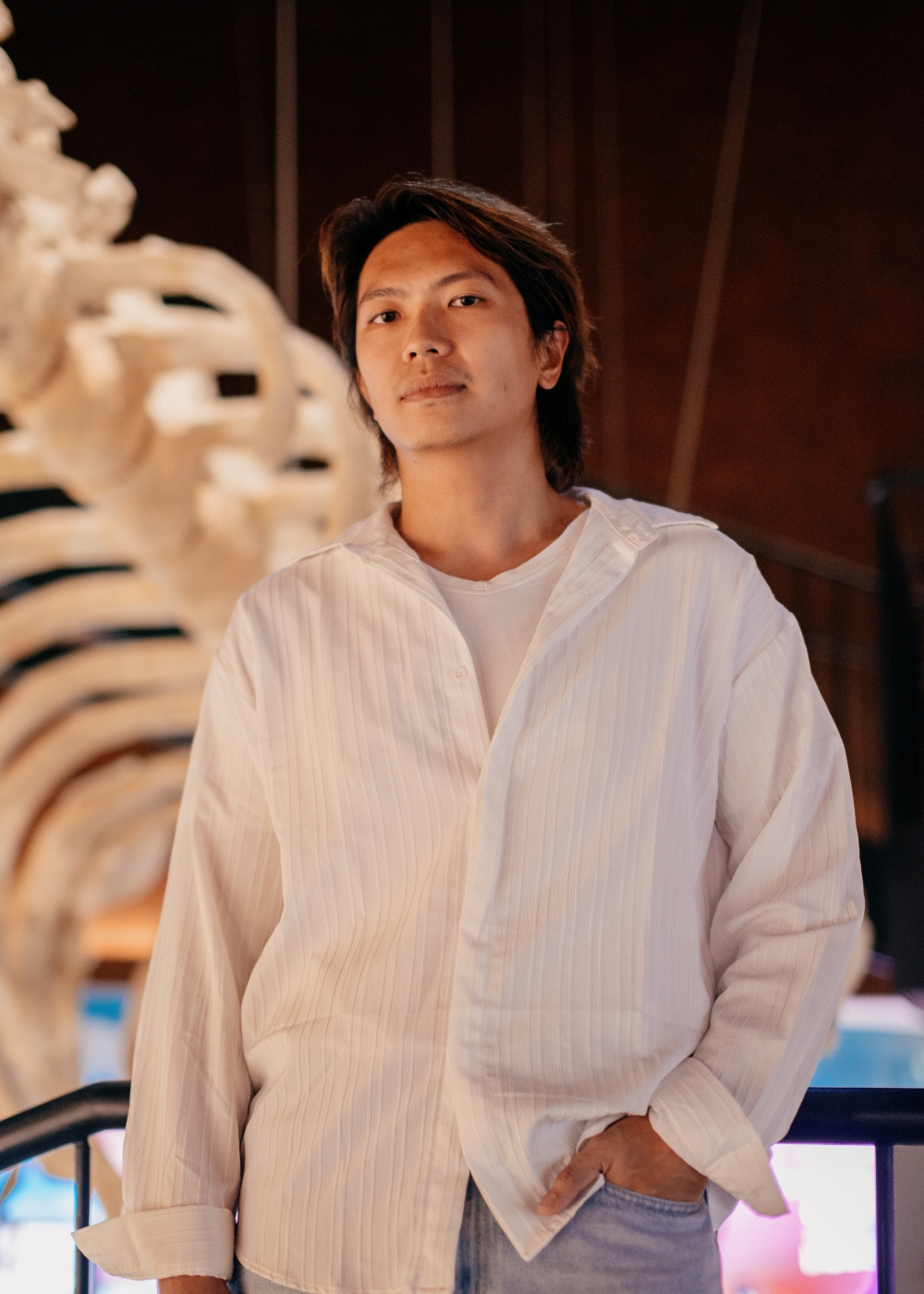
Oscar grew up in a modest household where creativity wasn’t fueled by abundance, but by limitation. Rewards came in the form of paper, not toys. “When I got a piece of paper, I treated it very carefully,” he says.
Guided by his mother, he spent hours crafting from old newspapers, unknowingly practising what would later become a cornerstone of his work: valuing and reusing what others discard. “We didn’t think it was about saving the environment. It was just how we grew up, we used what we had.”
On the other hand, Celine’s upbringing unfolded in her grandmother’s kampung, where nature itself became her playground. Without conventional toys, she learned to engage with her surroundings – leaves, trees, and open land shaping her sense of adaptability. That ability to work with what is available, rather than what is ideal, continues to inform her design approach today.
Together, these early experiences formed a shared instinct to see potential in the overlooked.
Where waste finds its second life
Their installation at Sunway Square represents a milestone – not just in scale, but in permanence. Unlike previous works that travelled between locations, Whale Fall is designed to stay.
The piece draws heavily from its environment. The reflective pond, inspired by the site’s history of tin mining, led them to think about fossils, remains, and the passage of time. Rather than opting for something familiar like a dinosaur, they chose a whale skeleton – something less immediately recognisable, encouraging viewers to look closer.
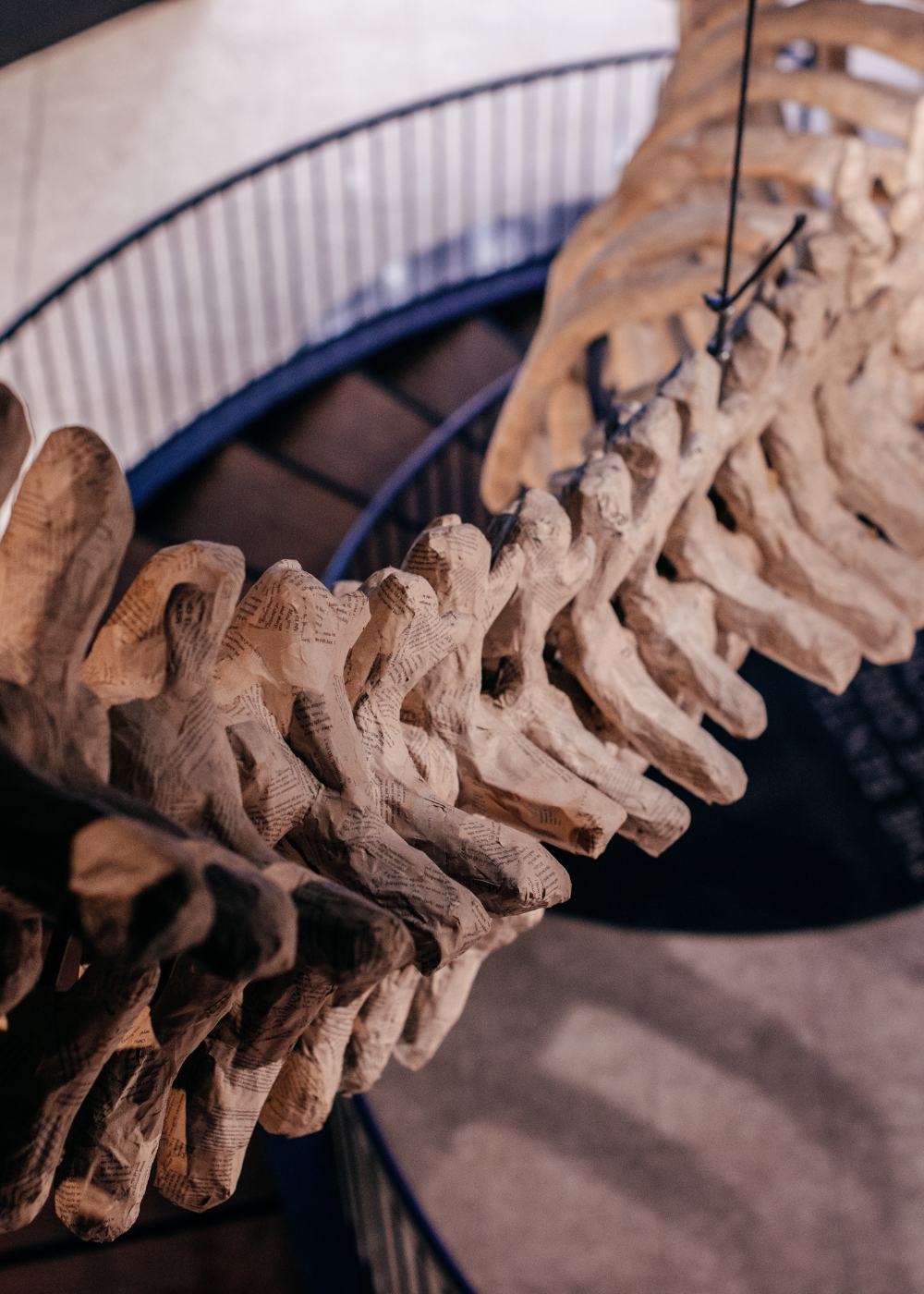
Whale Fall at The Library, Sunway Square.
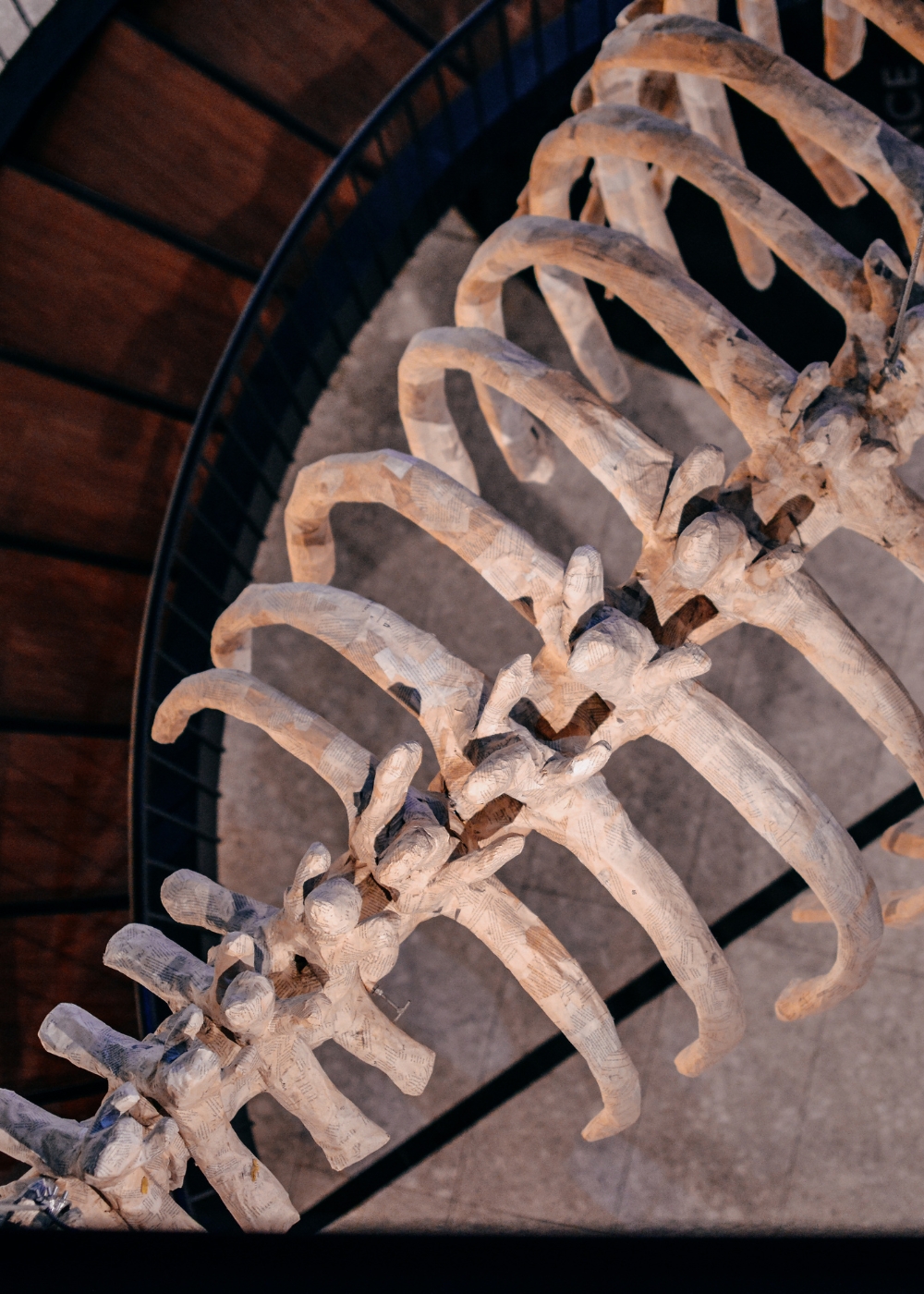
Whale Fall at The Library, Sunway Square.
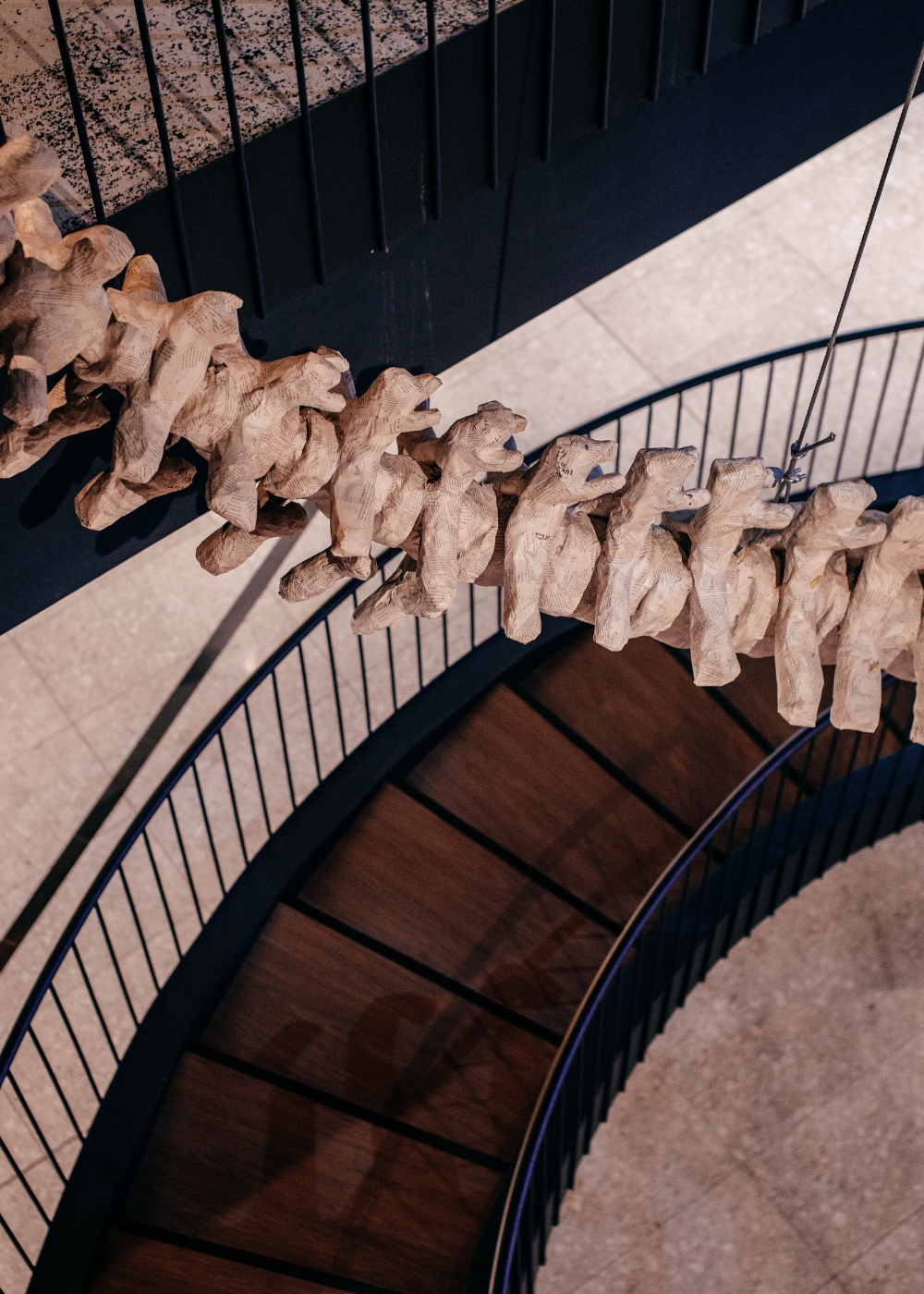
Whale Fall at The Library, Sunway Square
Above, the floating books offer a different kind of narrative – one that feels lighter but no less intentional. Paper, they explain, is one of the more forgiving materials to work with. In contrast, plastic – another medium they often use – is far more challenging.
“We have to wear masks when working with it,” they share. Years of experimentation have gone into understanding how different plastics behave – the smell, the toxicity, the difficulty in reshaping it into something meaningful. It’s a physically demanding process, one that underscores the very issues their work seeks to highlight.
Paper, on the other hand, is easier to manipulate, allowing for installations like the suspended books to take shape more fluidly. Yet both materials serve the same purpose: to demonstrate that art doesn’t need to begin with something new.
Their process is deeply tied to their architectural background. Each installation responds to its site, drawing from context rather than imposing an idea onto it. Even when clients request something “Instagrammable,” Celine and Oscar remain committed to storytelling. For them, virality isn’t manufactured – it emerges when a piece resonates authentically with its environment and audience.
Still, the process is rarely straightforward. Convincing clients to supply discarded materials, aligning on creative direction, and navigating timelines all require negotiation. In between large-scale projects, they take on freelance architectural work, murals, and smaller design jobs – another balancing act that sustains both their practice and their livelihood.
The constant negotiation of balance
Balance, for Celine and Oscar, is not a static achievement but an ongoing negotiation. As environmental artists, they are acutely aware of the contradictions in their work. Creating installations inevitably also generates some waste, and living sustainably in a convenience-driven world often comes with compromise.
Rather than claiming perfection, they focus on awareness – both in their own lives and in the messages their work conveys. Their art, they emphasise, is not about providing solutions. It is about prompting reflection. If viewers walk away thinking more carefully about their consumption habits, that is enough. “We don’t try to solve environmental problems,” Oscar says. “We aim to create awareness and hope people reflect on their own habits and do something about it in their own way.”
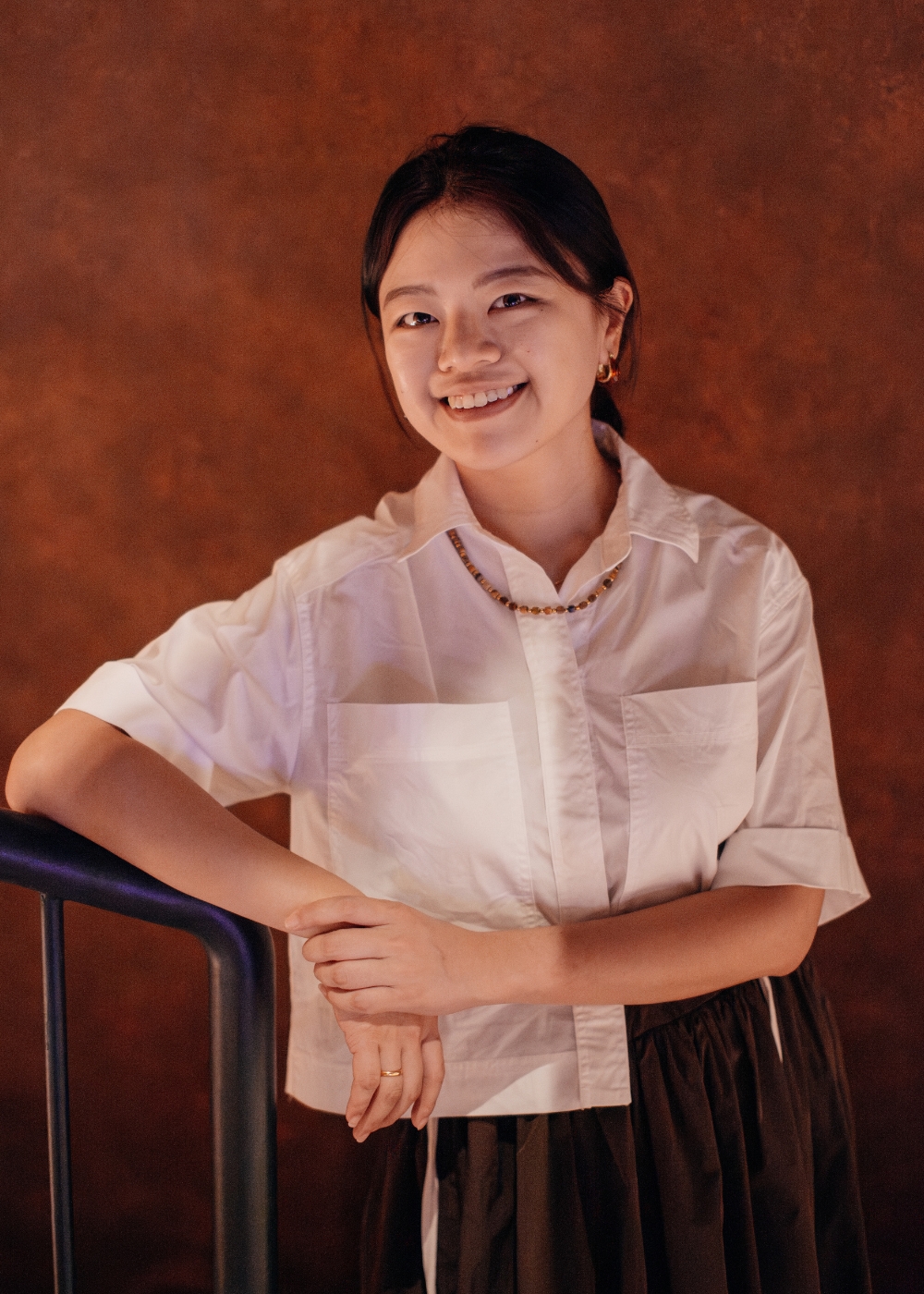
This philosophy extends into their personal lives as well. As parents, they’ve become more intentional about what and how they consume. Rather than aiming for an impossible ideal, they focus on small, intentional changes.
“When you see the waste that comes with one small purchase, you start to question every decision – do I really need this, or is it just convenience?” Celine admits that seeing the amount of packaging from a single purchase often makes her feel guilty. Hence, they consciously try to buy only what is necessary and reusing where they can. For their children, this has meant sourcing hand-me-down clothes instead of constantly purchasing new ones.
Even at home, they experiment with practices like composting, though they admit it’s not always easy, especially in limited spaces. It requires balance – between wet and dry waste, between effort and practicality.
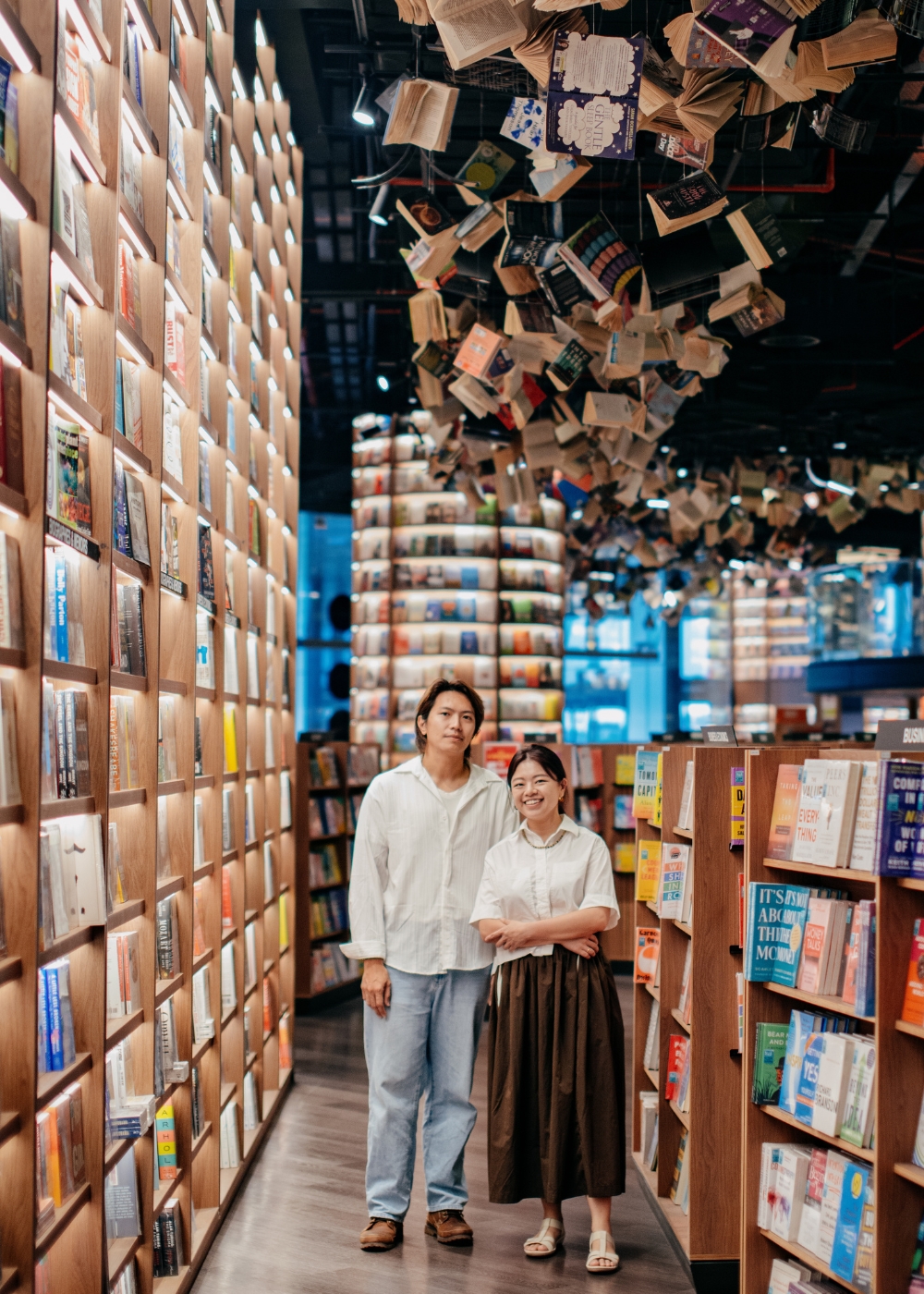
Their partnership, too, is built on constant recalibration. As husband and wife, business partners, and parents, boundaries blur easily. “We argue a lot,” they say almost in unison, before laughing. But the emphasis, they explain, is not on avoiding conflict, but on learning how to resolve it. “We practise how to argue – and how to solve,” Celine says. “If you don’t say what you feel, you cannot fix it.”
Their roles naturally complement each other: Celine handles communication and planning, while Oscar focuses on making and building. But beyond that, it’s a shared process of understanding each other’s strengths and limitations.
Parenthood has shifted that dynamic even further. “With kids, we learn to slow down,” Celine reflects. “We want to show them how to speak, how to behave. So we change ourselves first.” What began as conscious effort – speaking more gently, being more patient – has gradually become instinct.
What lies ahead
Looking ahead, their curiosity remains open. They are interested in exploring new materials, including food waste, drawn to its impermanence. “Food decomposes very fast,” Oscar notes. “So it’s challenging, but maybe that’s why it’s interesting.”
Beyond environmental themes, they are also beginning to reflect on more personal narratives. Oscar has been working on a picture book inspired by his late father and his daughter’s understanding of loss – a project that expands their exploration of value beyond material things. It sits alongside their environmental work, rooted in the same instinct to look closer at what is often overlooked.
After everything, their sense of balance lies not in trying to fix everything, but in choosing, again and again, to be thoughtful. In their art, their work, and their lives together, Celine and Oscar continue to navigate that delicate space between intention and reality – one conscious decision at a time.
Read more inspiring people stories here.
Photos by Imran Sulaiman.